
Are GCC and SASO approvals both required for exporting brake pads to GCC countries, and how are responsibilities split between manufacturer and local importer?
Summary:
GCC SASO brake pad certification requirements often confuse importers because Saudi Arabia enforces SASO/SABER while other GCC states accept GSO-aligned or ECE R90 technical evidence. For commercial vehicle brake pads, the manufacturer handles ECE R90 testing, ISO 26865 friction data, shear strength reports and IATF 16949/ISO 9001 quality evidence. The local importer registers the product on SABER, obtains Product and Shipment Certificates, and manages Arabic labeling and customs clearance. Getting the paperwork right before production can cut SABER lead time from 20–25 working days to 10–12 working days and avoid $150–$300 per day in container demurrage. BAIYUN Brake supplies a ready-to-upload manufacturer dossier for heavy-duty brake pads and linings, reducing first-submission rejection risk by 30–50%. Our ECE R90 and IATF 16949 approved facility supports distributors across Saudi Arabia, UAE, Qatar, Kuwait, Bahrain and Oman. If you're sourcing GCC truck and trailer brake pads, request a wholesale quote from BAIYUN Brake's export team.
Are GCC and SASO approvals both required for exporting brake pads to GCC countries, and how are responsibilities split between manufacturer and local importer?
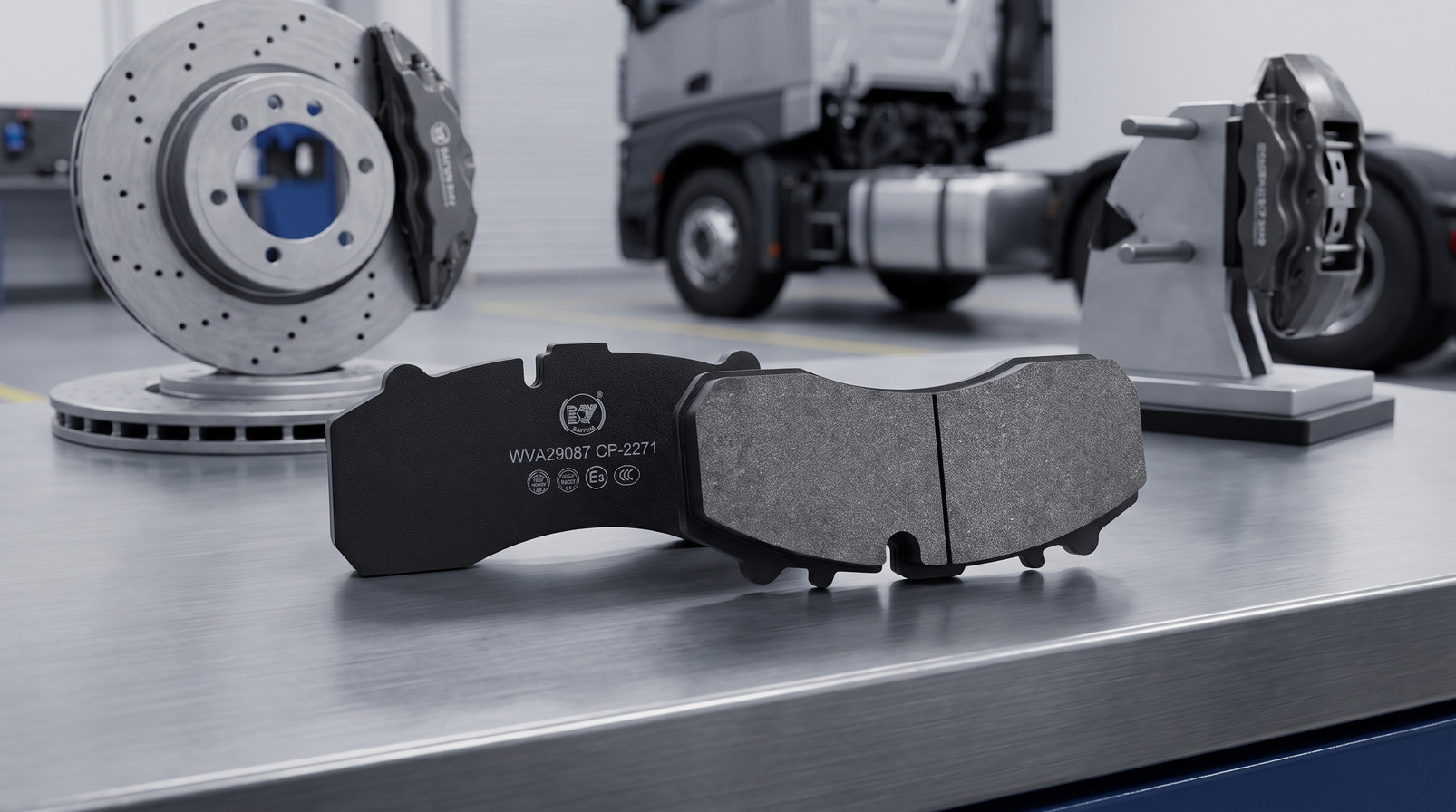
Quick answer: Not always as two completely separate approvals. Brake pads exported to GCC countries usually need Gulf Technical Regulation conformity plus Saudi-specific SASO/SABER clearance for Saudi cargo. The manufacturer handles technical testing and documentation; the local importer handles local registration, shipment certificates and customs clearance. If you're sourcing from a factory that already holds ECE R90 and IATF 16949, you avoid re-testing and cut approval lead time by up to 40%.
What Exactly Do GCC and SASO Brake Pad Certifications Cover for Commercial Vehicle Importers?
GCC SASO brake pad certification requirements split into two layers: the Gulf Standardization Organization framework recognized in Saudi Arabia, UAE, Qatar, Kuwait, Bahrain and Oman, and the Saudi SASO system enforced through the SABER platform. Since January 1, 2005, GSO has required conformity for motor vehicles and tires; replacement brake linings increasingly follow the same GSO-aligned route when importing states apply local enforcement.
SASO focuses on friction performance, shear strength, labeling, packaging and material safety. The Gulf technical regulation for brake linings generally mirrors ECE R90 test procedures: cold performance, speed sensitivity, fade and recovery. For Saudi Arabia, the importer uploads the product technical file and test reports to SABER, pays the certificate fees, and obtains a Product Certificate. Each shipment then needs a separate Shipment Certificate before cargo can clear customs. Other GCC states may accept the GSO Certificate or G-Mark plus a lab test report, but Saudi enforcement is stricter in practice.
You'll see two phrases in purchase specifications: "GCC approved" and "SASO approved." That doesn't mean two different brake pad formulations. It usually means the same ECE R90-tested product needs different paperwork layers for different entry points.
Summary: GCC and SASO both rely on the same ECE R90 test pack, but Saudi enforcement adds a mandatory SABER registration layer.
Are Both Approvals Mandatory, or Does One Certificate Cover the Whole Gulf Market?
No single document covers every GCC state for brake pads in 2026. Saudi Arabia treats SASO/SABER as mandatory for every imported commercial vehicle brake pad shipment. The UAE, Qatar, Kuwait, Bahrain and Oman often require GSO conformity but may accept ECE R90 technical reports if the importer registers through the local standards body. Saudi's SABER system alone rejects roughly 15–20% of first-time brake pad submissions for incomplete test data or mismatched HS codes, based on common customs feedback from GCC freight forwarders.
That doesn't mean you pay twice for the same test. The core technical evidence—ECE R90 approval, ISO 26865 friction data, shear strength results and material declarations—usually supports both routes. What changes is the local registration layer. A Chinese manufacturer can provide the test pack; the importer pays the local certificate fees, typically $150–$500 per product family depending on the notified body and renewal cycle.
Summary: Saudi Arabia requires SASO/SABER for every shipment; other GCC states accept a GSO-aligned or ECE R90 technical file, so one test report can support both.
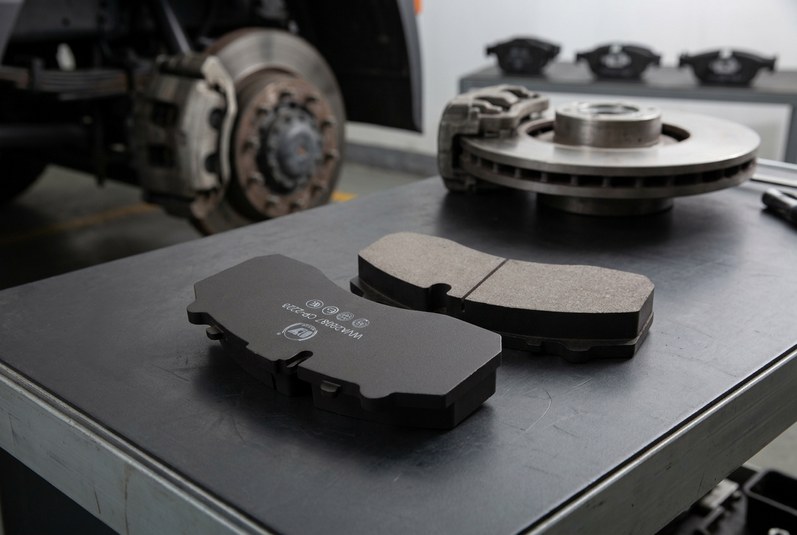
How Are Responsibilities Split Between a Chinese Manufacturer and the Local GCC Importer?
Manufacturer responsibility starts with design validation. BAIYUN Brake, for example, runs ECE R90 approval testing, maintains IATF 16949 and ISO 9001 systems, and supplies the product technical file: friction coefficient curves, shear strength values, thermal expansion data, material safety sheets and label artwork. The local importer handles SABER registration, Arabic label verification, customs declarations, and the Shipment Certificate request for each consignment.
This split works because the importer is legally responsible to Saudi and Gulf authorities. The manufacturer cannot apply for the importer's SABER Product Certificate, but a strong supplier will give the importer a ready-to-upload dossier. That's where sourcing confidence comes in. If you request commercial vehicle brake pads from a manufacturer that already exports to GCC clients, the approval pack usually includes test reports in the correct format, not just a generic certificate scan.
| Requirement | GCC / GSO Route | Saudi SASO / SABER Route | Typical Responsibility |
|---|---|---|---|
| Technical file and test reports | GSO-recognized ECE R90 test data | SASO-recognized ECE R90 / ISO 26865 data | Manufacturer |
| Product certificate registration | Local importer applies via GSO notified body | Importer uploads to SABER; obtains Product Certificate | Local importer |
| Shipment certificate | Sometimes not required for brake pads outside full vehicle scope | Mandatory for each Saudi shipment | Local importer |
| Factory audit / QMS evidence | IATF 16949/ISO 9001 accepted | IATF 16949/ISO 9001 accepted | Manufacturer |
| Labeling and Arabic marking | G-Mark or GSO mark plus Arabic warnings | SASO mark plus Arabic warnings | Joint: manufacturer prints, importer verifies |
Summary: The manufacturer supplies test evidence and product data; the local importer owns SABER registration and shipment certificates.
What Does ECE R90 Testing Actually Verify on Commercial Vehicle Brake Pads?
ECE R90 is the practical technical backbone for GCC brake pad approvals. It verifies that replacement brake pads stay within specified performance windows compared with the original equipment reference. One key requirement: after thermal cycling to 400°C and back, the pads must still produce at least 80% of their cold braking effectiveness. That test stops suppliers shipping pads that fade badly after repeated downhill braking on a loaded truck.
Other test points include speed sensitivity within a defined speed range, cold performance equivalence, and lining shear strength. For commercial vehicles, typical heavy-duty formulations target a friction coefficient of 0.38–0.45 across the 100–350°C working band. BAIYUN Brake's CV pad validation follows the same protocol, and we recommend importers ask for the full Annex 3 test data instead of a single-pass summary. If a supplier only shows a material certificate and no speed/fade curves, that's a red flag for GCC customs.
Summary: ECE R90 demands at least 80% cold performance after 400°C thermal cycling, making it the core technical requirement for GCC brake pad approval.
How Much Can You Save by Getting the Certification Paperwork Right the First Time?
Delays are the hidden cost in GCC brake pad imports. A container held at Jeddah or Dammam because of a missing SASO Shipment Certificate can accumulate demurrage of $150–$300 per container per day after the free time window. If the importer waits for test reports or tries to fix the label after landing, rework often adds 10–15 working days. For a 20-ton commercial vehicle brake pad order, that's $2,000–$4,500 in avoidable port and storage fees.
Doing the paperwork before production saves more. A manufacturer with a complete ECE R90 + ISO 26865 + IATF 16949 file can cut Saudi SABER Product Certificate lead time from 20–25 working days to around 10–12 working days for a first submission. That's why we tell buyers to qualify the documentation, not just the pad sample. Requesting commercial vehicle brake linings from a factory that already holds valid ECE R90 approvals is cheaper than paying a consultant to retest a batch later.
Summary: Complete documentation before production cuts SABER lead time to 10–12 working days and avoids demurrage costs of $150–$300 per container per day.
What Should Distributors Check Before Accepting a GCC/SASO Certificate from a Supplier?
Check the approval scope against the exact brake pad part numbers you ordered. A certificate for a different vehicle class or friction family doesn't cover heavy-duty truck pads. ECE R90 approvals are model-specific and friction-family-specific, so a distributor moving 500 sets monthly can't afford mismatched paperwork. Here's a practical verification checklist:
- ECE R90 approval number — verify it matches the product family and commercial vehicle application, not a generic company certificate.
- Test report completeness — ask for cold performance, speed sensitivity, fade/recovery and shear strength curves; at least 80% post-thermal performance is required.
- IATF 16949 certified facility — confirm the production site, not a sales office, is certified. Check certificate validity and surveillance audit dates.
- Arabic label artwork — confirm the supplier can print Saudi/GCC required Arabic warnings, country of origin, part number and batch code on the box.
- HS code alignment — make sure the importer declares the same 8-digit HS code the manufacturer uses in the test file. Mismatches are a top SABER rejection cause.
- Shipment-level documents — for Saudi cargo, confirm the local importer will obtain a Shipment Certificate for each invoice; Product Certificate alone won't clear customs.
- Batch traceability — check that production lot codes link to the filed test data. If a batch is outside the approved friction family, Saudi customs can block the entire container.
That's the buyer verification checklist we've built from years of GCC exports. Most of it costs nothing upfront and prevents expensive rework.
Summary: Verify ECE R90 scope, test curves, IATF site certification, Arabic labels and HS codes before accepting any GCC/SASO certificate.
What Are the Most Common Misconceptions About GCC SASO Brake Pad Certification Requirements?
Misconception: A Saudi SASO certificate automatically covers UAE, Qatar and Kuwait. Reality: Saudi Arabia enforces SABER; other GCC states route through their own standards bodies and may require GSO conformity. One certificate does not replace local registration in every market.
Misconception: ECE R90 approval means no further GCC paperwork is needed. Reality: ECE R90 is the technical test basis, but Saudi still requires SABER Product and Shipment Certificates. Brake pads without the shipment-level certificate get held, even with valid ECE R90 reports.
Misconception: The manufacturer is responsible for obtaining the SASO certificate. Reality: The local importer legally holds the SASO/SABER registration. The manufacturer provides the technical file and test evidence; the importer submits the application and pays local fees.
Summary: Saudi SASO, GCC GSO and ECE R90 are separate compliance layers; the manufacturer handles technical testing, while the local importer manages local registration.
Frequently Asked Questions: GCC SASO Brake Pad Certification Requirements
Q: Do we need both a GCC G-Mark and a SASO certificate for the same truck brake pad order?
A: For Saudi Arabia, you need SASO/SABER clearance. Other GCC states accept GSO-aligned technical evidence. Using one ECE R90 test report avoids a second test cycle, which saves roughly $1,500–$4,000 in retesting fees.
Q: What specific test data does Saudi SABER require for brake pads?
A: SABER asks for friction coefficient, shear strength and dimensional compliance reports. Brake pads must demonstrate at least 80% of cold effectiveness after 400°C thermal cycling per ECE R90. Missing fade/recovery curves is a leading cause of first-submission rejection.
Q: How long does SASO certification take for commercial vehicle brake pads?
A: A first-time SABER Product Certificate takes 10–15 working days after complete dossier upload. Shipment Certificates take 2–5 working days. With a full ECE R90 + IATF 16949 pack, BAIYUN Brake typically supports lead times at the shorter end.
Q: Who pays the SASO certificate fees, the manufacturer or the importer?
A: The local importer pays Saudi SABER registration and shipment fees, typically $150–$500 per product family plus per-shipment charges. The manufacturer pays for the underlying ECE R90 testing and quality system audits. This split keeps local compliance under the importer's legal control.
Q: Can BAIYUN Brake supply a ready-to-upload GCC/SASO technical file for truck brake pads?
A: Yes. BAIYUN Brake maintains ECE R90 approval data, IATF 16949/ISO 9001 certificates and full test reports for commercial vehicle brake pads. Distributors get the manufacturer-side dossier, cutting SABER preparation time by 30–50% compared with building a file from scratch.
What's the Fastest Way to Source GCC-Compliant Commercial Vehicle Brake Pads Without Rework?
Work with a manufacturer that treats GCC paperwork as part of the product, not an afterthought. BAIYUN Brake has 49+ years of manufacturing experience, IATF 16949 and ECE R90 approvals, and export documentation aligned with Saudi SABER and Gulf conformity checks. That reduces your compliance risk and keeps containers moving.
You can browse our heavy-duty brake pad range or request a wholesale quote directly from our export team. We'll confirm the current GCC/SASO certification status for your part numbers and provide the technical file your local importer needs.
Was this article helpful?
Average Rating: 5/5 (326)