
Yutong Disc Brake Pad Fitment Verification: What Buyers Should Check
Summary:
Yutong disc brake pad fitment verification requires more than a bus brand name. Buyers should check the WVA number, axle tag, pad dimensions and ECE R90 approval before ordering. This technical guide explains how to avoid common mis-fitment errors on Yutong bus disc brake pads, what documentation to demand from a commercial vehicle brake pad supplier, and how BAIYUN Brake's IATF 16949 and ECE R90 certified manufacturing supports sourcing confidence for importers and fleet distributors.
Yutong Disc Brake Pad Fitment Verification: What Buyers Should Check
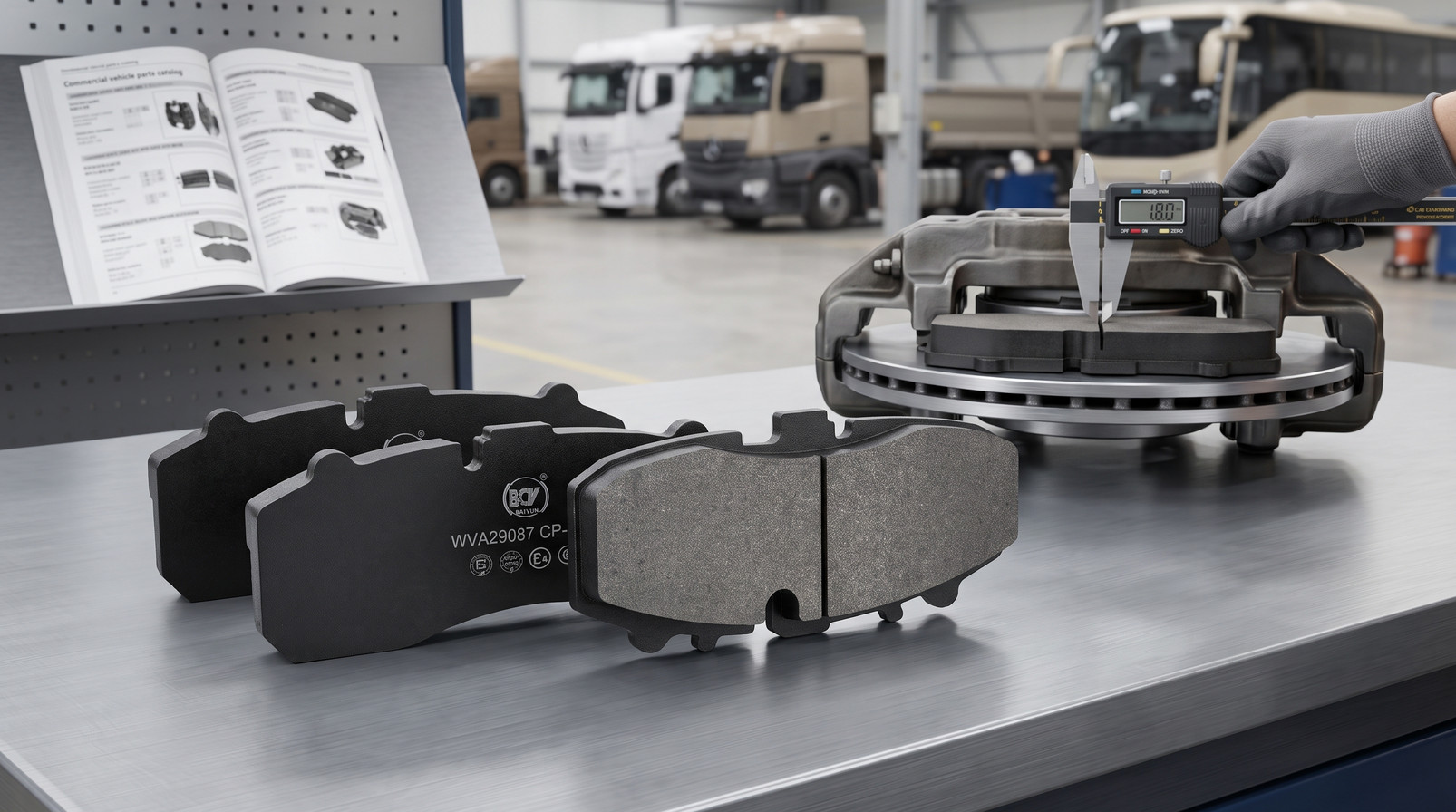
Quick answer: To verify Yutong disc brake pad fitment before ordering, check the WVA number and aftermarket cross-reference against the bus chassis VIN or axle tag, measure pad length, width, overall thickness and friction material thickness, confirm the SAE J866 friction edge code and ECE R90 approval, and compare wear indicators, chamfers and clips with the original pad. Always request a fitment confirmation sheet and sample approval before bulk shipment. If the WVA or OE data is missing, treat the claim as unverified and ask the supplier to confirm with their catalogue.
Zhengzhou Yutong Bus Co., Ltd. operates a main plant covering 1.12 million square meters with maximum daily production exceeding 430 units. That volume matters for parts buyers: a single Yutong bus model can use different axle suppliers depending on build year and market. If you're importing aftermarket disc brake pads, 'Yutong' alone is not a fitment specification. It's a starting point for a verification process, not a final part number.
Why Do Yutong Bus Brake Pad Fitment Errors Happen?
Most errors start with incomplete data. A buyer sends an RFQ saying 'Yutong 12-meter bus disc brake pad' without a chassis code, axle tag photo or WVA number. The supplier then guesses based on the most common Yutong axle fitment in that market. That guess might be right for 7 out of 10 buses, but the other 3 come back with pad abutment width off by 2–3 mm or a wear sensor in the wrong position.
Yutong's production footprint is huge. The main plant in Zhengzhou covers 1.12 million square meters, and the new energy bus plant opened in 2012 covers 1.33 million square meters with 600,000 square meters of floor area. Daily capacity exceeds 430 buses. With that much variation, aftermarket suppliers see a lot of confusing listings. Some third-party trading platforms quote 197 × 220 × 14.5 mm for Yutong bus brake components, but that dimension usually refers to a brake lining, not a disc brake pad. If you mix wholesale CV brake lining inquiry data with a disc pad order, the parts won't fit.
For genuine disc pad verification, BAIYUN Brake's export team asks for the WVA number first. If you don't have it, a clear photo of the pad in the caliper plus three measurements works just as well. The goal is to stop a guess before it becomes a container full of unsellable parts.
Section summary: Fitment errors happen when buyers provide only the bus brand or a brake lining dimension for a disc brake pad RFQ, and the supplier fills the gap with an assumption.
What Information Should You Demand From a Yutong Brake Pad Supplier?
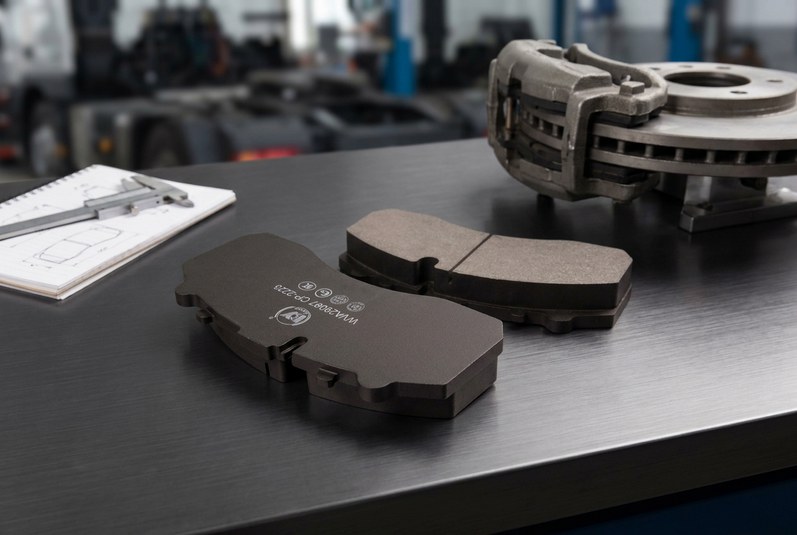
Some importers accept a supplier saying 'yes, we have Yutong pads' without seeing a drawing. That's a mistake. A reliable fitment verification package for a Yutong disc brake pad includes five data points: WVA or FMSI number, dimensional drawing with backing plate and friction material thickness, SAE J866 friction edge code, ECE R90 approval number, and photos of the pad installed in the caliper.
Ask the supplier to put all of this in writing before you approve a sample. BAIYUN Brake sends a fitment confirmation sheet for commercial vehicle orders that lists the exact Yutong chassis code, axle model and measured dimensions. If a supplier cannot produce that sheet, you're still in the guessing stage. You can also download our product catalogue to see how commercial vehicle disc pad listings should be structured, but the catalogue alone won't confirm fitment without your axle data.
| Verification Item | What It Confirms | Red Flag If Missing |
|---|---|---|
| WVA number | Pad shape and friction family index | Supplier says 'Yutong universal' without a number |
| FMSI or manufacturer cross-reference | Matches Yutong axle supplier model | Only OE part number, no aftermarket alternative |
| Pad length × width × thickness | Fits caliper carrier and disc thickness | Dimensions vary more than ±0.3 mm from sample |
| Friction edge code (SAE J866) | Friction coefficient range for service | No code or code not printed on pad |
| ECE R90 approval number | Legal aftermarket use in many markets | Approval number not traceable to ECE database |
| Chamfer, slot, wear indicator configuration | Noise, wear warning and initial bedding behavior | Different slot pattern from OE sample |
Section summary: Without a written fitment confirmation sheet and dimensional drawing, a Yutong disc brake pad quotation is only a price, not a verified part.
How Do You Verify Yutong Disc Brake Pad Dimensions Without OE Data?
You start with the old pad. Remove one pad from the caliper and measure its total length, width and overall thickness with a digital caliper. Measure the friction material thickness separately from the backing plate. A deviation of ±0.3 mm in length or width can cause the pad to jam in the carrier or rattle under braking. On a bus that runs 15–20 hours a day, that small error turns into a noise complaint and a return.
If you can't measure the pad because it's already scrapped, send the supplier a photo of the axle tag and the caliper casting number. Yutong buses often use axle assemblies from multiple suppliers, and the axle tag carries the build detail that the chassis VIN doesn't always show. BAIYUN Brake's technical team can cross-reference that tag with the current aftermarket WVA database. If the number is not in the database, we request a sample pad from the old set before quoting a bulk order.
This kind of verification discipline matters when you're importing for fleet service. A distributor sourcing 500 sets monthly can't afford inconsistent friction coefficients batch to batch. You need the pad geometry and the friction edge code to line up every time, not just on the first sample.
Section summary: Dimensional verification against a removed pad plus an axle tag photo resolves most Yutong disc brake pad fitment questions faster than chasing an OE part number.
How Does ECE R90 and IATF 16949 Affect Your Fitment Confidence?
ECE R90 is a performance approval, not a fitment certificate. It requires replacement brake pads to match the original part's braking performance within defined tolerances, including cold performance, speed sensitivity and high-temperature recovery up to around 400°C. A pad can pass ECE R90 on a dynamometer and still not fit your Yutong caliper carrier if the WVA number is wrong. That's why you need both the approval and the geometry check.
IATF 16949 matters for consistency. BAIYUN Brake's IATF 16949 certified facility controls raw material batches, mixing, pressing and curing so that pad dimensions and friction coefficients stay within tolerance across production lots. That's the difference between a supplier who sends one perfect sample and one who sends 1,000 pads that all behave the same. Ask for the IATF 16949 certificate for the factory that actually presses the pads, not just the trading company's ISO 9001 paperwork.
Section summary: ECE R90 proves braking performance compatibility; WVA/dimensional checks prove mechanical fitment. Neither replaces the other.
What Hidden Costs Can Fitment Verification Prevent?
Wrong disc brake pads don't just fail at installation. They wear unevenly, overheat the rotor, and can trigger brake judder within a few thousand kilometers. A commercial vehicle rotor often costs $200–$500 in the aftermarket. A Yutong bus out of service for half a day can cost a fleet operator another $200–$600 in lost route revenue, depending on the contract. Multiply that across 10 buses and the risk becomes serious.
Fitment verification is cheaper than returns. If you browse our heavy-duty brake pad range, you'll see that commercial vehicle pads are built with thicker backing plates and high-temperature friction formulas. Matching the right pad to the right Yutong axle from the start avoids a second shipment, import duties on replacement goods and a stranded fleet. For buyers who want to model total cost, our brake maintenance cost analysis page shows how small friction differences change maintenance spend over two years.
Section summary: Spending an extra 30 minutes on fitment verification can prevent several thousand dollars in rotor damage, downtime and return freight.
What Are the Most Common Misconceptions About Yutong Disc Brake Pad Fitment Verification?
Misconception: A brake pad that looks identical will always fit. Reality: Visual similarity misleads. Yutong buses use multiple axle suppliers and build variants, so pads can differ by 2–3 mm in abutment width or retaining clip position. That's enough to cause caliper binding or pad rattle.
Misconception: ECE R90 approval means the supplier has verified fitment on my exact Yutong chassis. Reality: ECE R90 tests braking output against an OE reference on a dynamometer, not installation on every vehicle. Pin slider clearance, caliper carrier tolerance and wear sensor location still need dimensional confirmation.
Misconception: If the old pad has no WVA number, the supplier can use the chassis VIN alone to confirm fitment. Reality: VIN narrows the chassis series but often lacks axle build detail. A pad measurement plus axle tag photo gives faster and more reliable verification than VIN alone.
What Questions Should Fleet Buyers Ask Before Placing a Bulk Order?
Before you release a purchase order for 500 or 1,000 Yutong disc brake pad sets, run a short buyer verification checklist. These are the questions BAIYUN Brake's export team walks through with every new commercial vehicle buyer.
- Take a clear photo of the Yutong axle tag or chassis VIN and send it to the supplier.
- Remove one existing pad and measure length, width, overall thickness and friction material thickness with a caliper.
- Record the WVA number or any cast/printed code on the backing plate.
- Ask the supplier for a fitment confirmation sheet listing the exact Yutong chassis code and axle model.
- Request sample pads before bulk order; verify slots, chamfers, clips and wear sensor placement against the removed pad.
- Check the supplier's ECE R90 approval document for the specific part number, not a generic certificate.
- Confirm production batch traceability, friction test report and IATF 16949 certificate for the pressing facility.
- Agree on a written return/refund clause for mis-fitment or premature wear.
One more thing: ask the supplier how they handle the first article inspection. If they don't have a documented procedure for matching dimensions to your sample, find another supplier. BAIYUN Brake has been manufacturing commercial vehicle friction materials for our 49+ years of manufacturing experience, and we treat first article verification as a gate, not an option.
Section summary: A pre-shipment fitment audit with the eight steps above separates a parts vendor from a genuine sourcing partner.
What Are the Most Frequently Asked Questions About Yutong Disc Brake Pad Fitment Verification?
Q: What is the fastest way to verify a Yutong disc brake pad fitment without an OE number?
A: Remove a pad and read the WVA or FMSI number from the backing plate. Compare that with the supplier's catalogue. If no number exists, measure length, width and total thickness and send a photo of the pad in the caliper. BAIYUN Brake's export team confirms most commercial fitments within 24 hours when buyers provide those three data points.
Q: Does ECE R90 certification guarantee a Yutong disc brake pad will fit my bus?
A: No. ECE R90 certifies braking performance compatibility, not geometric fitment. You still need the correct WVA number or dimensional match. Treat ECE R90 as a safety baseline, not a fitment check.
Q: Should I buy Yutong disc brake pads from a factory without commercial vehicle aftermarket experience if the price is lower?
A: Generally not. Commercial vehicle disc pads use heavier steel backing plates, higher-temperature friction formulas and harder wear cycles than typical light-duty pads. A factory without commercial vehicle quality systems may pass initial samples but fail in fleet service. Verify IATF 16949 and CV brake pad production experience before ordering.
Q: What documentation should a supplier provide before I approve a bulk Yutong pad order?
A: Ask for a pre-shipment inspection report with batch photos, a dimensional report against your sample, a friction test report under SAE J2522 or GB 5763, an ECE R90 approval certificate for that exact part number, and a fitment confirmation sheet. Missing any of these is a valid reason to delay payment.
Q: How many sample pads should I request for a Yutong bus fleet verification?
A: For a fleet of 50 or more buses, request at least 2–4 sample sets from different production batches. Install them on one or two buses across mixed duty cycles for 2,000–5,000 km. Inspect pad wear, noise, disc scoring and brake temperature after service to bridge the gap between catalogue data and real-world operation.
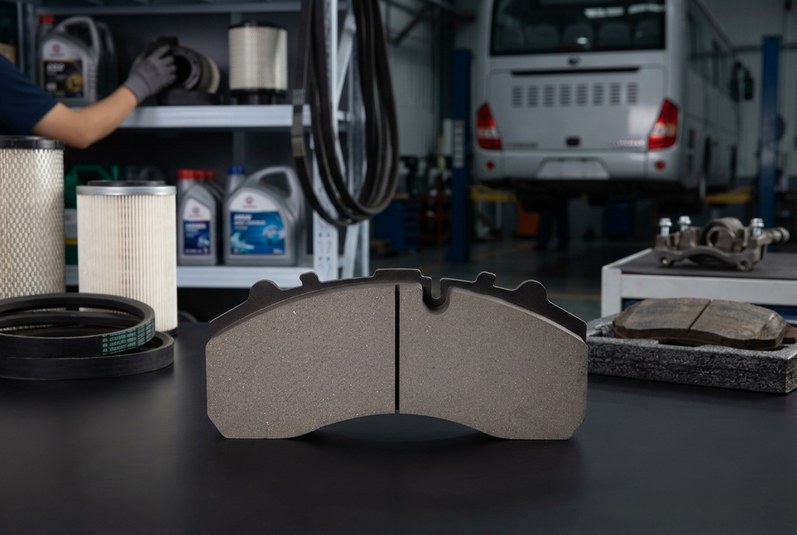
Most Yutong disc brake pad fitment failures are avoidable. They come from skipping the axle tag, accepting a verbal fitment promise, or treating ECE R90 as a geometry check. If you're a fleet owner, importer or distributor, the verification steps above will save you money and keep buses on the road. For specific Yutong pad applications, the BAIYUN Brake team can check WVA numbers, request sample measurements and issue a request a wholesale quote once the fitment is confirmed. Don't let a guess become your inventory.
Was this article helpful?
Average Rating: 5/5 (114)