
Uneven Brake Pad Wear: Building an Evidence Pack for Your Supplier
Summary:
Uneven brake pad wear supplier claim evidence is what separates a fast warranty decision from a stalled email chain. Before contacting your supplier, record axle position, inner and outer pad thickness per wheel, batch numbers, maintenance history, and caliper condition. Most uneven wear on commercial vehicle brake pads comes from mechanical faults—seized calipers, worn guide pins, rust-jacked backing plates—not defective friction material. A professional inspection and official documents such as IATF 16949 process records and ECE R90 approval scope close the loop. This guide explains how importers, distributors, and fleet procurement teams can build an evidence pack that includes a wear pattern table, a supplier verification checklist, and five common questions. BAIYUN Brake reviews claims against traceable batch records and test data. For buyers moving hundreds of sets monthly, this documentation protects margins and keeps trucks in service while making supplier communication more efficient.
Uneven Brake Pad Wear: Building an Evidence Pack for Your Supplier
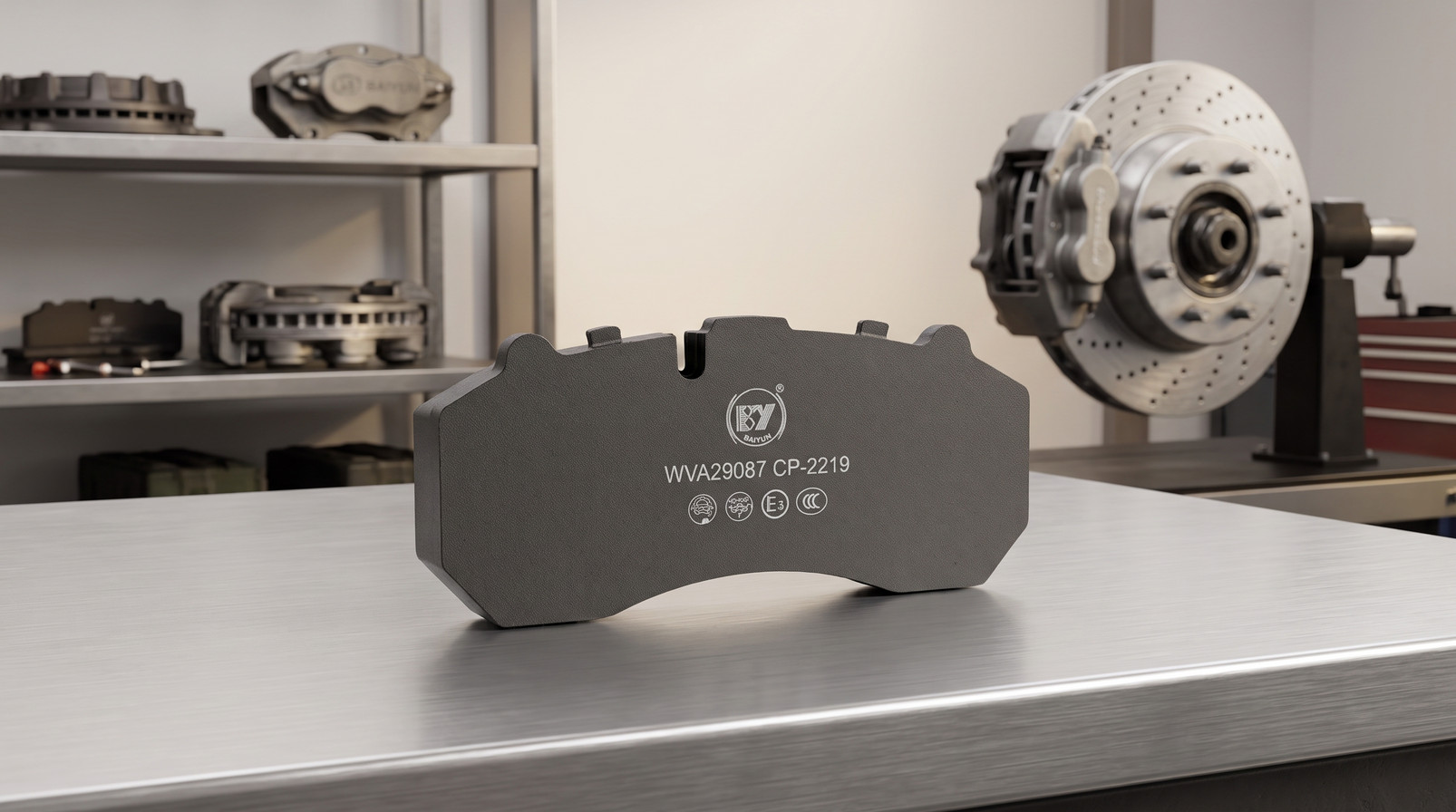
Quick answer: Uneven brake pad wear claims fail when buyers send a complaint without measurements. Before contacting your supplier, record axle position, inner and outer pad thickness per wheel, batch numbers, maintenance history, and caliper condition. Most uneven wear on commercial vehicles is caused by mechanical faults—seized calipers, worn guide pins, rust-jacked backing plates—not defective friction material. Have a professional inspection confirm root cause and issue an official document. Then compile an evidence pack with measurements, service records, and inspection notes. This pack lets a supplier evaluate your claim without guesswork.
Distributors, importers, and fleet procurement teams all face the same moment. A workshop reports that a set of commercial vehicle brake pads wore unevenly. The buyer emails the supplier. The supplier asks for axle position, thickness readings, batch numbers, and photos. If those aren't ready, the claim stalls. BAIYUN Brake's export team sees this regularly across our 49+ years of manufacturing experience. The buyers who document the failure properly get decisions faster.
That's the core of this article: an evidence pack isn't a nice-to-have. It's the difference between a warranty replacement and a rejected claim. For commercial vehicles—trucks, buses, trailers, mining trucks, port logistics vehicles—the brake system handles high thermal loads and long service intervals. The evidence pack needs to reflect that.
Why Most Uneven Wear Claims Fail at the First Email
A distributor sends an email: pads wore unevenly, send replacements. The supplier opens the file. No axle position. No inner versus outer thickness. No batch number. No maintenance history. That's not a claim. That's a premise for a long back-and-forth. Most uneven wear claims fail at that first email because they don't separate material fault from mechanical fault.
For a commercial vehicle, a single axle can carry 9 to 13 tonnes. The caliper, guide pins, brackets, and air chamber all influence pad movement. If a guide pin seizes, the inner pad scrubs the disc harder than the outer pad. If a bracket step develops, the pad can taper. These aren't compounding faults; they're installation and maintenance faults. Suppliers can't see any of that from a one-line email.
So what does a strong claim look like? It starts with a measurement sheet. Not a paragraph. Buyers who attach a table with axle position, side, inner pad thickness, outer pad thickness, and photos get a faster technical review. That's the baseline. If you're sourcing heavy-duty pads, request OEM commercial vehicle brake pad quote only after you've captured this data, because that data protects both sides.
What Exactly Should Importers Record on the Axle?
You don't need a laboratory to capture the first half of the evidence. You need a caliper, a marker, and a service log. Start with the axle position: steer axle, drive axle, tag axle, or trailer axle. Then identify the wheel position: left or right. Finally, identify the pad position: inner or outer relative to the caliper. In a commercial vehicle, inner and outer pads on the same caliper rarely wear at the same rate when something is wrong. Recording them separately is the only way to spot a seized piston or a sticking guide pin.
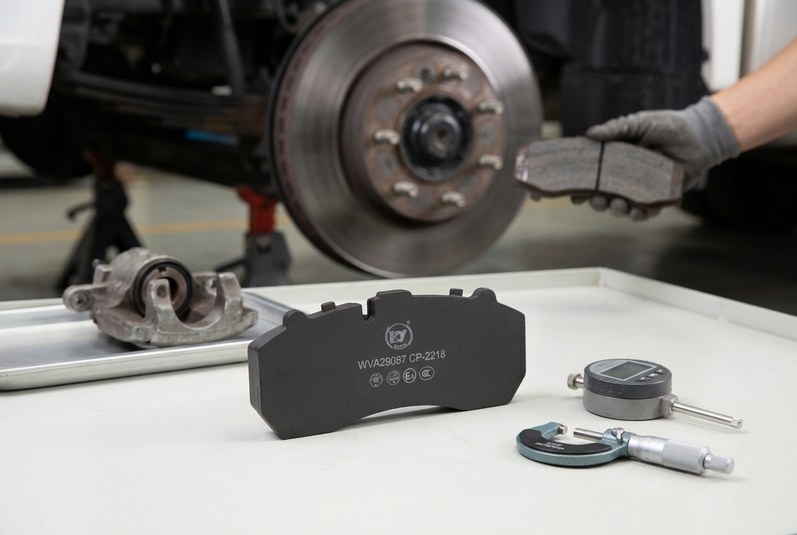
Measure pad thickness at three points: leading edge, center, and trailing edge. A tapered wear pattern will show a thickness difference across those three points. For example, a leading edge of 8.0 mm and a trailing edge of 12.5 mm on the same pad suggests caliper misalignment or a worn guide pin. That's not a material defect; it's a mechanical signature. Write those numbers down. Don't average them. Suppliers need the gradient.
Also note the disc surface. Heat banding, scoring, or thickness variation on the disc will transfer to the pad face. A technician can measure disc runout with a dial gauge. If runout exceeds the vehicle manufacturer's limit, the pad wear pattern becomes pseudo-random, but the cause is the disc. The evidence pack should include that reading, too.
Batch Numbers and Maintenance History: The Missing Evidence
Batch numbers might feel like warehouse paperwork. They're actually the traceability thread that tells a manufacturer whether the issue is repeatable. A single batch of pads from a production run has the same friction compound, same pressing parameters, same steel backing plate lot. If all pads from one batch show the same uneven wear across different vehicles and intervals, that's a red flag. If only one set from that batch wears unevenly, the fault is more likely on the vehicle side.
For B2B buyers, batch numbers also matter because importers often mix inventory across multiple containers. A distributor might have pads from two different production batches on the same pallet. Without batch numbers, a supplier can't isolate which run the claimant received. That delays root cause analysis. When you file a claim, include the batch or lot code printed on the pad edge or packaging. If the code is missing, that itself is a traceability failure and should be noted.
Maintenance history completes the picture. When was the pad installed? What mileage has the vehicle covered? Were the caliper guide pins cleaned and relubricated? Was the disc replaced or machined? For fleets, pull the vehicle maintenance record. A pad that wore unevenly after 5,000 km on a new disc with no caliper service usually points to installation or caliper issue, not friction compound. For an importer consolidating service histories, a simple spreadsheet with axle, mileage, and service actions is enough to start. If you need material data for comparison, material data sheets can help you understand the expected friction range.
Professional Inspection and Official Documents: Who Signs Off?
Field evidence gets you half the story. Official inspection documents close the loop. A professional brake technician can measure caliper slide force, guide pin free play, and bracket wear step. They can also determine whether the pad backing plate is rust-jacked—a condition where corrosion between the backing plate and bracket forces the pad against the disc. Rust belt operating conditions make this worse, and it's often misreported as pad delamination.
For supplier claims, the inspection document should be signed or stamped. BAIYUN Brake's quality team reviews claims against documentation from certified technicians or workshop supervisors. The more official the document, the faster the evaluation. If a claim involves potential material defects, the supplier may request a return of the pad set for lab analysis. That's normal. But first, the inspection notes must rule out the obvious mechanical causes.
Certifications help here, too. An IATF 16949 certified facility operates with documented process control and traceability. ECE R90 approval applies to the specific pad part number and confirms the friction performance meets regulatory thresholds. When you source from a supplier with those credentials, you can reference IATF 16949 certified facility records in your evidence pack. It keeps the discussion technical, not emotional.
What Does Uneven Wear Tell You About the Brake System?
Uneven wear is a symptom, not a diagnosis. The table below separates common patterns from likely causes and supporting evidence for commercial vehicle brake systems. Use it to build the technical section of your evidence pack.
| Wear Pattern Observed | Common Root Cause | Evidence to Capture | Supplier Evaluation Angle |
|---|---|---|---|
| Inner pad worn significantly more than outer pad on same caliper | Seized caliper guide pins or piston | Slide movement video/photos, pin lubrication condition, inner/outer thickness readings | Not material defect if mechanical binding confirmed |
| Outer pad worn more than inner pad | Pad binding in bracket or corrosion pack between backing plate and bracket | Backing plate corrosion photos, bracket wear step, installation date | Maintenance issue unless backing plate dimension out of tolerance |
| Tapered wear across pad length | Caliper misalignment, worn guide pins, incorrect installation torque | Thickness at three points, caliper bracket torque records | Dimensional verification needed |
| Grooved or scored pad face | Contaminated disc or embedded debris | Disc surface photos, pad face close-up | External contamination, not compound fault |
| Edge lifting or partial material loss on one side | Mechanical stress from caliper misalignment or excessive disc runout | Backing plate photos, disc runout dial gauge reading | Installation or disc issue; request return if both axles repeat |
A 2022 study on freight wagon brake pads recorded pad wear of 19.6–28 mm in empty mode and 27.53–38.04 mm in loaded mode over 74,400 km. The study found uneven wear depended on pressure force distribution and operating mode, not just the pad material. That matters for commercial applications: an air brake chamber that delivers uneven force across the axle will wear pads unevenly even if the pads are perfectly made. So your evidence pack should include air system pressure checks if the vehicle uses air brakes.
If the evidence points to a genuine material consistency issue, compare the pads against the manufacturer's test report. BAIYUN Brake supplies commercial vehicle brake pad test report documents to help distributors verify friction coefficients and thermal stability. Use that as the baseline, not a guess.
Supplier Verification Checklist for Fleet and Distributor Buyers
Before you file a claim, work through this checklist. It's designed for importers and fleet procurement teams, not retail buyers. If you can answer yes to every item, your supplier can move to root cause analysis immediately.
- Axle and wheel position recorded: steer, drive, tag, trailer; left/right; inner/outer pad.
- Thickness readings taken at three points per pad: leading edge, center, trailing edge.
- Batch/lot numbers captured: from pad edge or packaging.
- Maintenance history pulled: installation date, mileage, caliper service records.
- Caliper condition checked: guide pin free play, slide movement, boot tears, corrosion.
- Disc condition noted: runout, thickness variation, scoring, heat banding.
- Photos attached: pad face, backing plate, caliper bracket, disc surface.
- Professional inspection document included: signed or stamped by a certified brake technician.
- Official pressure system checks for air brakes: chamber stroke and pressure balance if applicable.
This checklist isn't busywork. It's the difference between a supplier guessing and a supplier analyzing. For a wholesale buyer moving 500 sets a month, a rejected claim costs more than a single pad set. It disrupts inventory planning, customer confidence, and future pricing. Document first. Then negotiate. If you also carry linings for drum brakes, the same evidence logic applies. Request a quote for commercial vehicle brake linings with batch and maintenance records attached, and the technical review moves faster.
Frequently Asked Questions From Importers and Distributors
What evidence do suppliers actually need for uneven brake pad wear claims?
Suppliers need axle position, inner and outer pad thickness measurements, batch or lot numbers, maintenance history, and caliper condition photos. BAIYUN Brake's quality team asks for a thickness variation map across the pad face, because claims without these details often stall. The more structured the data, the faster the technical review.
Is uneven pad wear usually a manufacturing defect?
No. Field reports and industry testing show most uneven wear comes from seized calipers, worn guide pins, rust-jacked backing plates, or incorrect installation. A 2022 freight wagon study found uneven pad wear depended on pressure distribution and operating mode, not pad material alone. That's why professional inspection documents are the first screen in any supplier claim.
How do batch numbers help in a supplier claim?
Batch numbers let the manufacturer trace the exact compounding and pressing run. If only one batch from a multi-batch delivery shows wear anomalies, that points to an external installation variable. If all batches show the same pattern, the supplier can run chemical and thermal analysis against the original production records.
Should importers always request a professional inspection before filing a claim?
Yes. Official inspection documents separate material faults from mechanical faults. For example, a fleet may need a certified brake technician to check caliper slide force and guide pin free play. Without that, suppliers can't rule out installation issues, and the claim turns into a circular argument.
What certifications should a brake pad supplier have to support evidence-based claims?
Look for IATF 16949 quality systems and ECE R90 approval for the specific part number. These certifications mean the supplier maintains traceability and validated formulas, making it easier to compare test data against your evidence pack. Ask for the specific approval scope for the part number in question, not a general company certificate.
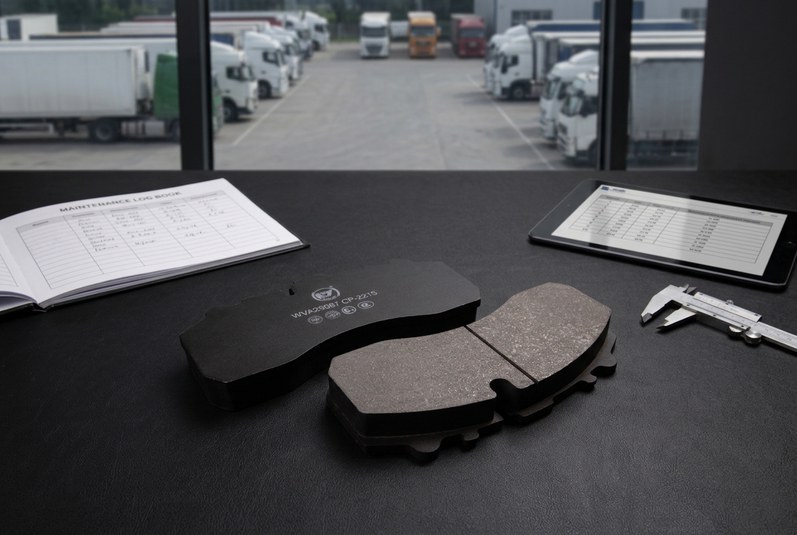
Final point: don't send another vague uneven wear complaint. Assemble the evidence pack. If the data points to a genuine material issue, browse our heavy-duty brake pad range and submit the pack for technical review. For a direct quote or export support, request a wholesale quote. The goal isn't to win an argument. It's to solve the problem and keep your trucks rolling.
Was this article helpful?
Average Rating: 5/5 (184)