
Trial Order vs Repeat Order: Which Brake Pad Details Need Reconfirmation?
Summary:
Brake pad trial order repeat order changes can cause silent batch drift for importers, distributors, and fleet procurement teams. A first approved sample does not mean every repeat container matches the same friction formula, mold revision, packaging spec, or label file. Repeat orders need a controlled reconfirmation process—not a full destructive sample re-inspection. This article explains which four commercial vehicle brake pad details to reconfirm before releasing a repeat PO, including friction material batch data, mold and backing plate revisions, packaging and label versions, and written batch change approval. BAIYUN Brake provides a reconfirmation sheet with every repeat order proposal to help commercial vehicle brake importers avoid warranty claims, port delays, and field performance drift. Includes a buyer checklist, reconfirmation matrix, and FAQ for wholesale brake pad buyers.
Trial Order vs Repeat Order: Which Brake Pad Details Need Reconfirmation?
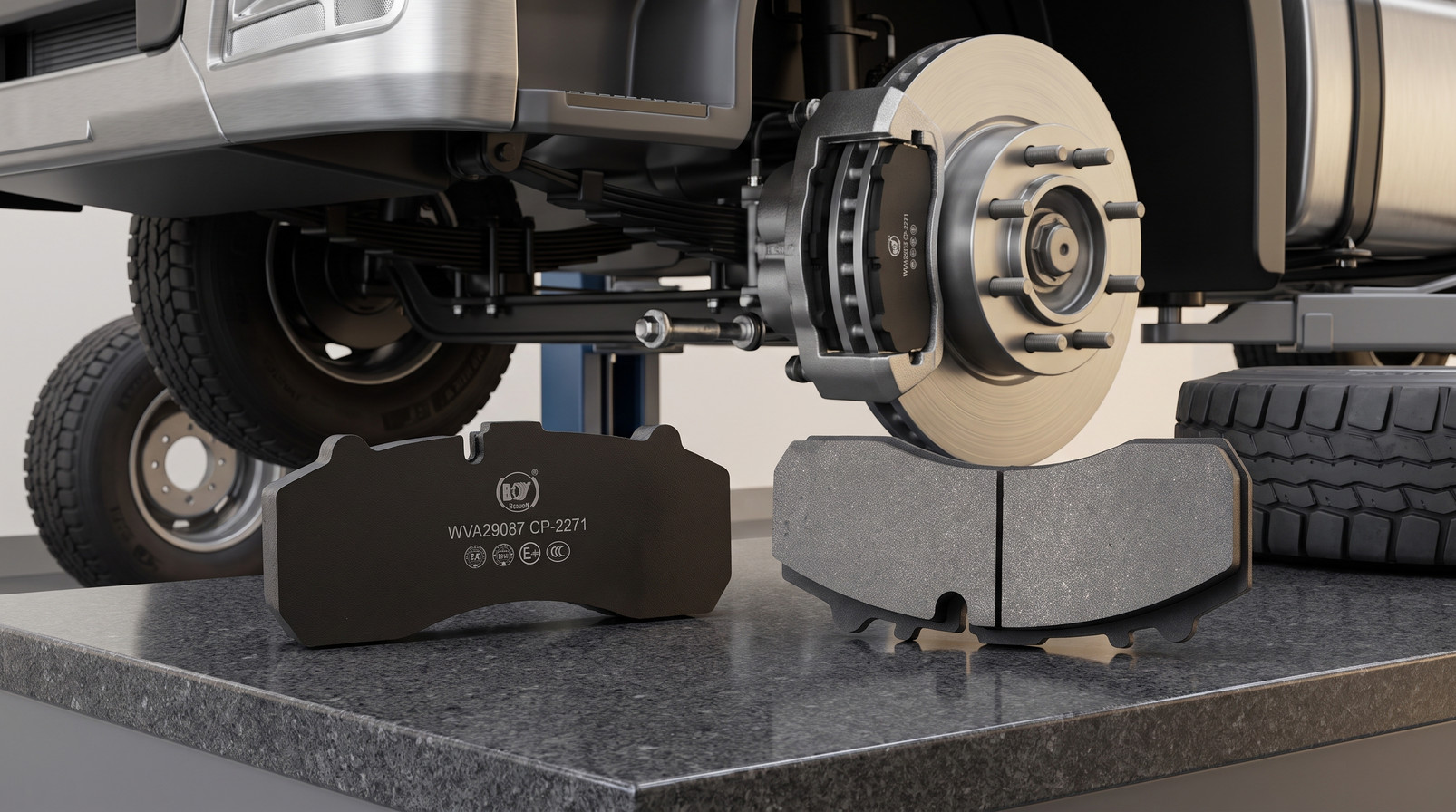
Quick answer: Repeat orders don't need a full sample inspection re-run. They need a controlled reconfirmation of four things: friction material formulation, mold/backing plate revision, packaging and label version, and any batch change approval. For importers, distributors and fleet procurement teams, the highest risk isn't a new supplier—it's a supplier that ships a slightly different product under the same part number. BAIYUN Brake locks these details into the first production dossier, but every repeat order should still trigger a written reconfirmation before payment.
A distributor in Dubai receives the second container from the same Chinese brake pad exporter. The part numbers match. The WVA codes match. But the friction feels different on long downhill routes. This isn't a rare story. Commercial vehicle brake pads are wear-intensive parts; a small change in steel fiber grade or resin content will show up on a fully loaded truck or bus before it ever shows up in a lab report.
Why Repeat Orders Need a Different Reconfirmation Process
The first trial order was about proving capability. A buyer checks friction level, wear rate, hardness, shear strength, and maybe runs a few hundred kilometers of field testing. Once approved, the instinct is to treat repeat orders as repurchasing the same item. That's not true for brake friction materials. Raw material suppliers change, mold cavities wear, backing plate coatings get revised, and packaging lines update label files. Trial orders capture a snapshot; repeat orders need delta control. You can browse our heavy-duty brake pad range to see how we group commercial vehicle part numbers for distributor procurement.
Fleet procurement teams often confuse batch consistency with certification. ECE R90 approval doesn't freeze the friction formula forever; it approves a representative sample under a specific recipe and manufacturing process. If the supplier changes a raw material source after approval, the approval scope may no longer cover that exact mix. So a repeat order needs a written confirmation that the approved recipe hasn't drifted.
Consider a bus operator in Latin America running 300 units in urban traffic. A pad that wears 15% faster on a repeat order won't trigger a roadside failure immediately; it will shorten replacement intervals and blow the fleet maintenance budget. Importers who treat repeat orders as price-only transactions inherit that cost. The right question to ask on every repeat PO is not 'Can you match the price?' but 'Can you match the last approved production dossier?'
Friction Material: Same WVA, Different Mix?
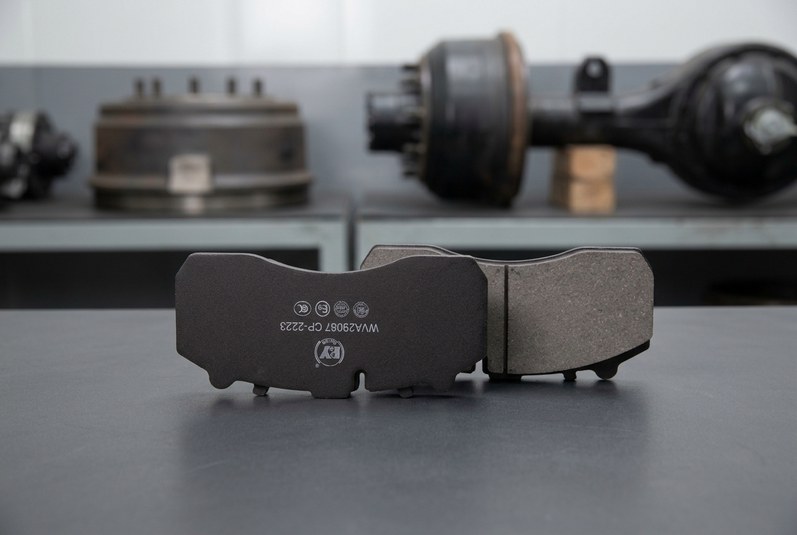
WVA codes identify pad shape and backing plate interface—not friction formula. A commercial vehicle brake pad with the same WVA number can still be built with a different steel fiber, a different resin system, or a slightly altered mixing cycle. For an importer, that's the difference between a truck brake that holds on a 6% grade and one that fades after three hard stops. At our IATF 16949 certified facility, raw material incoming inspection includes batch-level data for every fiber, resin, and filler lot, so formulation drift gets caught before blending.
No need to destroy new pads for every repeat order. Instead, request the batch certificate for the specific production lot. Confirm the material designation, the friction coefficient range, and the density or specific gravity. If the supplier can't show that the repeat lot matches the approved recipe, hold the shipment. Some importers ask for a lab sample from each container. That's reasonable for critical long-haul applications, but it's not a substitute for documented change control.
Raw material substitution isn't always a downgrade. Sometimes a new fiber improves thermal stability. But if the change isn't disclosed, the importer can't distinguish an improvement from a cost reduction. For ECE R90 approved commercial vehicle pads, homologation covers the tested recipe and manufacturing conditions, not an open-ended family of formulations. A documented change control system is what separates a stable export partner from a commodity trader.
Mold and Backing Plate Revisions: The Geometry You Can't See
Brake pads wear into the rotor and caliper. A repeat pad that is 0.3 mm thicker at the backing plate can bind; one that's 0.2 mm thinner can create excessive cold clearance. Mold cavities also wear over thousands of press cycles. At some point, a worn cavity changes chamfer angles or slot widths enough to affect noise and contact pattern. Repeat orders should carry a mold revision number and a cavity status note. Ask whether any cavity has been repaired or replaced since the trial approval. For installation geometry issues, a brake lining installation guide can help your fleet customers spot fitment problems before the axle goes back into service.
Don't let a supplier simply say 'same mold.' There's no such thing after 20,000 press cycles. A PPAP-style dimensional report for the repeat lot is normal in commercial vehicle brake friction. If the supplier can't provide current cavity drawings, that's a warning sign for distributors who stock multiple axle types.
Backing plate coating changes also matter. A change from zinc flake to another coating can affect corrosion resistance in coastal or winter maintenance environments. Salt spray performance isn't visible in a photo. If your trial order specified a coating standard, ask the supplier to reconfirm it by name—not by color.
Packaging and Label Reconfirmation: What Customs and Fleets Actually Check
Customs officers look at the label before they look at the friction material. Fleet mechanics do the same when matching a pad to a heavy-duty axle. A changed lot number format, a moved ECE R90 mark, or a different country of origin line can stop a container at port. Repeat orders need a label proof comparison, not a trust-based email. Download our product catalogue to review current commercial vehicle brake pad families and packaging formats before you reorder.
Packaging specifics also change. Maybe the trial order used a 10-piece inner box but the repeat order shifts to 8-piece to reduce freight. That affects warehouse scanning and distributor order picking. Freeze carton dimensions, inner box quantity, pallet height, and moisture barrier. For private label buyers, artwork changes can be even costlier. A new ink color or a different barcode position can fail a retailer audit without any change to the actual pad.
Moisture damage is one of the top freight claims for brake pads shipped by sea. Corrugated cartons with wrong flute type or missing liner can collapse under pallet load. If the repeat order switches carton supplier, you need to know before the container is sealed. Label consistency also matters for ECE R90 traceability; customs authorities may cross-check the approval mark against the physical label on the outer carton.
Batch Change Approval: The Process That Prevents Silent Substitution
Silent substitution is the biggest repeat order risk in commercial vehicle brakes. A supplier changes a raw material source, a backing plate coating, or a label printer, and doesn't tell the importer because the part number stayed the same. Six months later, warranty claims spike. The fix isn't more testing; it's contract language. The repeat PO should state that no friction material raw material change, mold revision, backing plate coating change, packaging alteration, or label change has occurred since the last approved shipment without written buyer approval.
At BAIYUN Brake, every repeat order proposal includes a reconfirmation sheet. It records the last approved formulation code, mold revision, label file version, and packaging spec. If something changed, the sheet flags it for approval before proforma confirmation. That's how we keep commercial vehicle fleet procurement stable across multiple containers. For mixed axle programs, our wholesale CV brake lining inquiry follows the same reconfirmation protocol.
Fleet procurement teams should treat batch change approval as part of supplier qualification, not as after-sales support. A supplier with a written change notification procedure is easier to audit than one that fixes deviations on the factory floor. ISO 9001 and IATF 16949 both require documented change control, but the buyer still has to ask for the records on each repeat order.
Reconfirmation Matrix: Trial Order vs Repeat Order
Use this matrix as a quick reference when issuing a repeat PO. The goal is to reconfirm deltas, not re-audit the entire supplier from zero.
| Reconfirmation item | Trial order focus | Repeat order focus | Documents to request |
|---|---|---|---|
| Friction material | Full formulation disclosure, friction coefficient range | Batch-level raw material change log | Batch certificate, material data sheet |
| Mold / backing plate | Initial cavity number, dimensional approval | Current revision number, cavity wear status | Drawing revision, PPAP-style dimensional report |
| Packaging | Carton strength, pallet pattern | Label version, OEM/private label artwork freeze | Packaging spec, label proof |
| Batch changes | Process capability baseline | Written approval before any raw material, mold, or label change | Change notification, deviation approval |
Buyer Verification Checklist Before Releasing the Repeat PO
- Confirm the production part number, WVA number if applicable, and BAIYUN internal code on the proforma invoice.
- Ask for a written statement that no friction material raw material change, mold revision, backing plate coating change, packaging artwork change, or label print change has occurred since the last approved shipment.
- Request batch-level test data for the specific repeat order lot—not the original homologation sample.
- Compare the current label proof against the last approved label file, including ECE R90 approval mark placement, country of origin, lot number, and bar code.
- Lock the packaging specification: carton dimensions, weight, inner box quantity, pallet pattern, and moisture barrier.
- Reconfirm whether the order is mixed-WVA or single-WVA, because MOQ per WVA can change on repeat orders.
- Get written confirmation of the mold cavity count and whether worn cavities have been repaired or replaced since trial approval.
FAQ for Importers and Distributors
Q: Do I need to re-inspect samples on every repeat brake pad order?
A: No. Full destructive sample inspection doesn't add much if the first production dossier is locked. But you should reconfirm four items: friction material batch data, mold revision, packaging label proof, and change approval. BAIYUN Brake keeps the first dossier on file and issues a reconfirmation sheet with each repeat proforma, so you're checking delta changes, not starting from zero.
Q: Why can the same WVA number feel different on a repeat order?
A: WVA refers to the pad shape and backing plate interface, not the friction formula. A supplier can keep the same WVA number while changing steel fiber grade, resin content, or mixing time. For commercial vehicles descending long grades, that can shift fade behavior even when the part physically fits.
Q: What packaging and label details should an importer freeze after the trial order?
A: Freeze carton dimensions, inner box quantity, moisture barrier, pallet pattern, and label artwork including ECE R90 mark position, country of origin, lot number, and bar code format. Customs clearance and fleet mechanics both rely on label consistency. A changed label can trigger port inspection delays.
Q: How do batch change approvals work for repeat commercial vehicle brake pad orders?
A: The supplier should provide a written change notification before substituting any raw material, mold cavity, backing plate coating, packaging, or label. The buyer approves the change or requests a controlled pilot batch. At BAIYUN Brake, any formulation or mold change requires sign-off before the repeat PO is confirmed; we don't ship silent modifications.
Q: Is the MOQ clause the same for trial and repeat brake pad orders?
A: Not always. Some exporters keep the initial MOQ clause only for the first order and reserve the right to change per-WVA minimums on repeat orders. Ask for a written clause stating whether the repeat order MOQ is per WVA number, per container, or per order. This protects mixed-WVA distributor orders.
What BAIYUN Brake Recommends Before Your Next Repeat PO
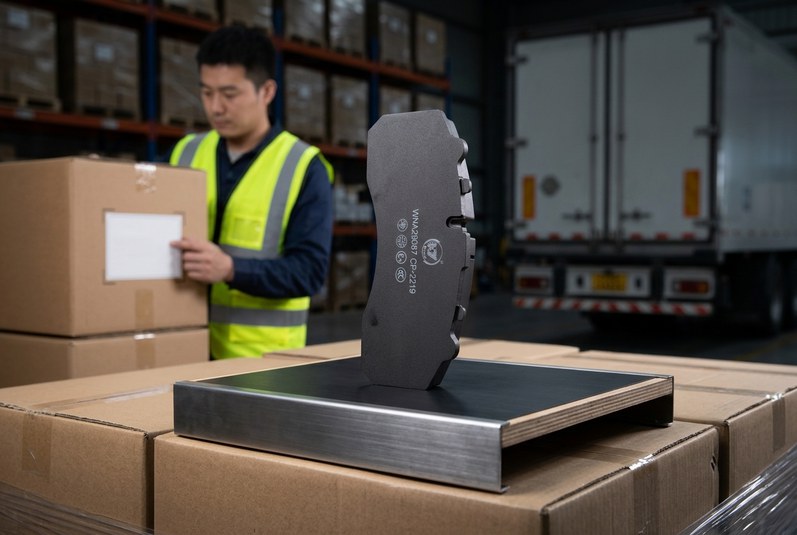
Send your supplier a one-page reconfirmation sheet, not a generic sample request. Attach the last approved label proof, material data sheet, and mold revision. Ask for a signed deviation statement if anything changed. For our commercial vehicle brake pad customers, we include this reconfirmation with every repeat quote—so the second container matches the first one you approved. Review our commercial vehicle brake pads or request a wholesale quote to see the process in action.
For manufacturer and company information, see About BAIYUN.
Was this article helpful?
Average Rating: 5/5 (93)