Specifying Brake Pads for Urban Bus Duty Cycles
Summary:
Specifying urban bus brake pads starts with route data, axle loads, brake system type, and supplier verification. This B2B guide for importers, distributors, and fleet buyers explains why urban bus duty cycles demand different friction material data than highway truck applications, what documentation to request, and how to avoid unverified formulations. It includes a selection checklist, replacement fitment checks, and procurement FAQs for commercial vehicle brakes.
Specifying Brake Pads for Urban Bus Duty Cycles
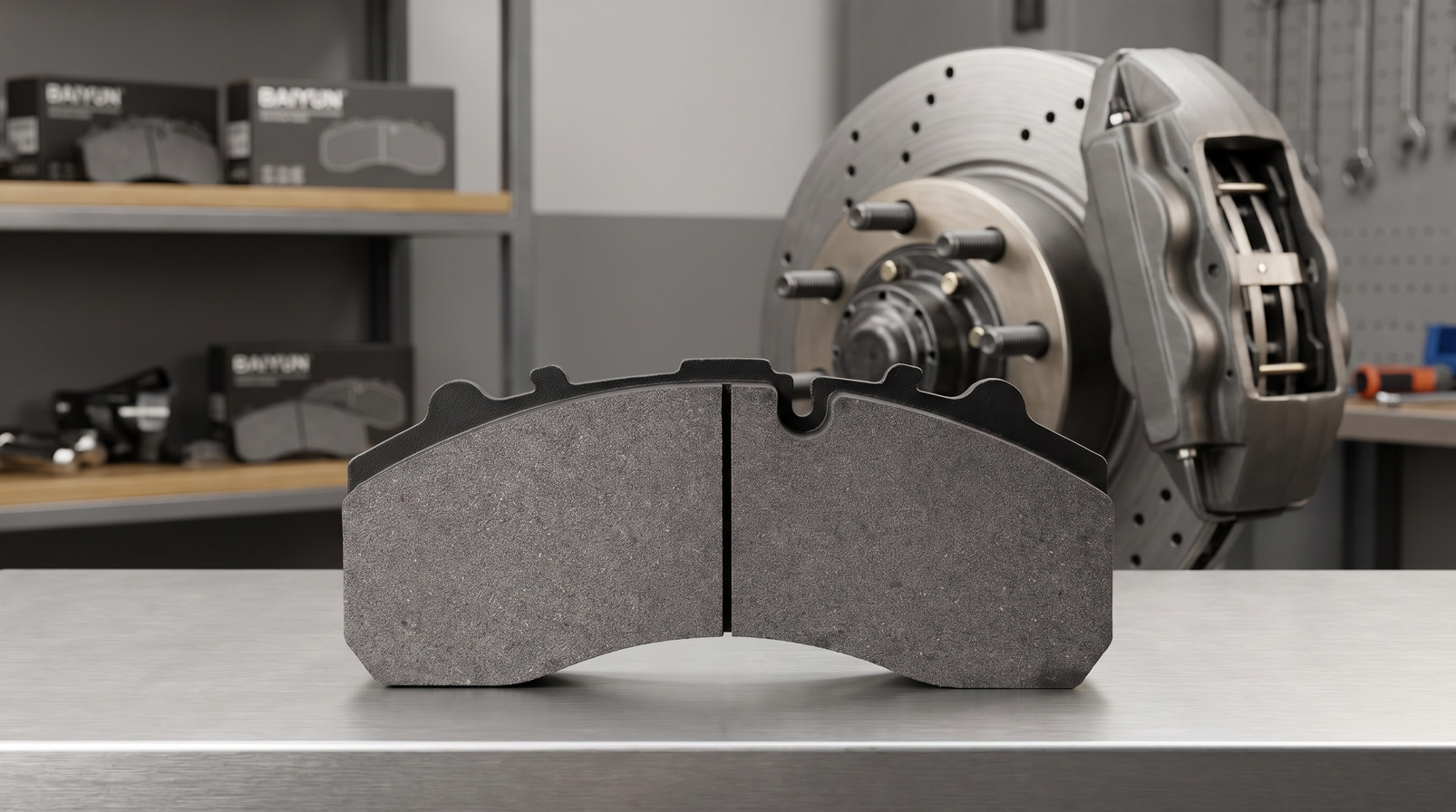
Quick answer: Urban bus brake pad specifications should start with route stop frequency, gross axle weight, brake system type (air disc or air drum), and current failure data. Ask suppliers for dynamometer reports showing friction stability across repeated thermal cycles, ECE R90 approval, and IATF 16949 process control. Never approve a pad based only on ceramic or low-metallic marketing labels.
Why urban bus duty cycles are not a generic commercial vehicle application
City buses don't brake like long-haul trucks. A bus on a dense route may complete 20–40 full stops per cycle, then repeat that cycle four or five times in one shift. The pad surface gets hot, cools during passenger boarding, gets hot again. That thermal cycling is harder on friction material than a single sustained downhill stop.
As an illustrative example, transit-style urban operation often places air disc brake pad life in the 40,000–60,000 mile range before route, loading, and driver behavior adjustments. Hilly routes or aggressive stop-start driving can shorten that by 30–50%. So what does that mean for your bottom line? If you spec a highway truck pad for a city bus, you'll either overheat the pad or wear it out in half the expected life.
For distributors and importers, the starting point should be a browse our heavy-duty brake pad range that is validated for high-cycle commercial vehicle use, not a generic catalogue pad. You'll want pad formulations that handle repeated heat input without losing friction or wearing the rotor too fast.
What data should you collect before specifying an urban bus brake pad?
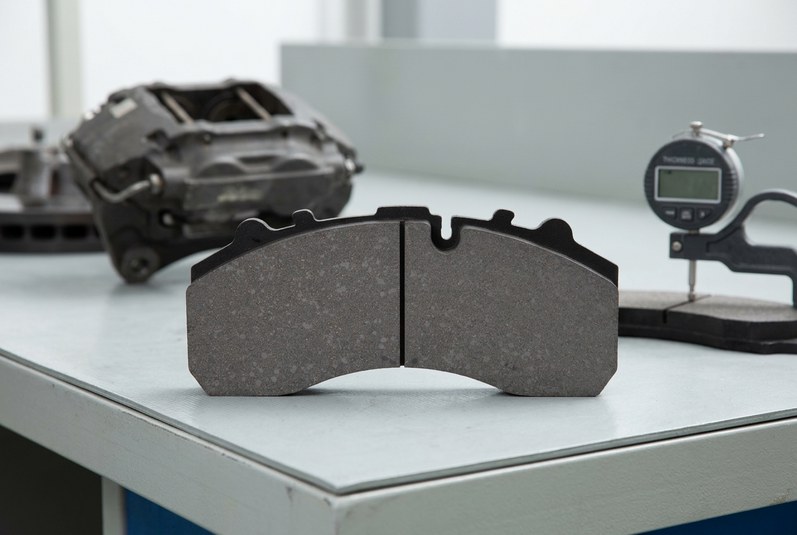
Most specification mistakes start with incomplete route data. A fleet engineer who skips route data will over-spec and pay too much, or under-spec and own the warranty claims later.
- Route profile: stops per kilometre, average speed between stops, terminal dwell time, and gradients. More stops per km means more energy per hour into the pads.
- Loading: gross vehicle weight rating, front and rear axle ratings, standing passenger load assumptions, and winter ballast practices. Heavier loads increase energy per stop and recovery demand.
- Brake system type: air disc or air drum, caliper model, slack adjuster type, rotor or drum dimensions, and whether the fleet uses retarders or engine braking.
- Fleet service history: current pad life, failure modes, rotor or drum condition, noise complaints, and warranty return data. This reveals whether the problem is material choice or maintenance fitment.
Ask for all four before contacting a brake pad supplier. The supplier should be able to cross-reference the existing part number or ask for dimensional drawings. If the part number is unknown, confirm with supplier catalogue before ordering.
How do air disc and air drum bus brakes change pad or lining selection?
Most new urban buses have moved to air disc brakes on steer and drive axles. But thousands of older city buses still run air drum brakes. The two systems need completely different friction parts.
Air disc brake pads are flat plate assemblies that slide into the caliper. You need exact pad shape, backing plate thickness, abutment clip design, and wear sensor option. Air drum brakes use curved linings riveted or bolted to the shoe. The lining width, radius, arc length, and fixing pattern must match the existing brake shoe. Don't use a drum lining number on a disc brake caliper, even if the friction family sounds similar.
BAIYUN Brake supplies both commercial vehicle brake linings and disc brake pads for heavy-duty bus applications. The format determines fitment, but the specification logic stays the same: you still need friction stability, wear life, and thermal recovery data for your route.
What minimum technical documentation should a bus brake pad supplier provide?
A serious supplier won't just send a price list. They'll send test data. For urban bus duty cycles, the following table shows the documentation that matters and why.
| Specification area | What to request | Why it matters for urban buses |
|---|---|---|
| Friction level and stability | Cold and hot friction coefficient curves across the expected temperature window. Many urban CV pad formulations sit in a 0.35–0.45 range as an illustrative reference. | Prevents long pedal travel and fade in stop-and-go operation |
| Repeated thermal cycling and recovery | Dynamometer cycles that reproduce loaded urban braking, with recovery after heat build-up | Shows whether the pad maintains friction after extended route cycles |
| Compressibility and shear strength | Compressibility at specified pressure and shear strength of friction material bond | Low compressibility gives firmer pedal feel; high shear strength reduces material cracking |
| Wear rate under urban load | Specific wear rate or projected pad life under loaded stop-start cycle testing | Allows fleet buyers to compare total cost per kilometre, not just part price |
| ECE R90 approval | Approval certificate matched to the exact pad part number | Confirms regulatory performance for replacement parts in the intended application |
| IATF 16949 process control | Process audit and batch traceability records | Reduces batch-to-batch variation across months of fleet supply |
| Dimensional and fitment data | Drawings or verified WVA/OE cross references. If missing, confirm with supplier catalogue. | Prevents wrong caliper or shoe fitment and warranty disputes |
Ask which procedure the report follows. SAE J2522 and GB 5763 are commonly used for commercial vehicle friction comparison; don't accept a supplier who cannot state the test method. If a supplier cannot produce current test reports, don't approve the part. You can review material data sheets and request application-specific reports from BAIYUN Brake before committing.
What verification checks should importers and fleet buyers run before approving a bus brake pad?
You're not buying a cheap consumable. You're buying a safety part that affects route reliability and maintenance costs. Frankly, the price gap between certified and uncertified pads rarely justifies the warranty risk.
- Request the ECE R90 approval certificate for the exact pad or lining part number you plan to import, not just the manufacturer's general certification.
- Ask for dynamometer test reports that include repeated thermal cycling, hot fade, and recovery. Single-stop performance data won't tell you how the pad behaves after 20 stops.
- Check the dimensional drawing against your bus caliper or brake shoe. If WVA/OE cross references are not supplied, confirm with supplier catalogue.
- Request batch traceability records: raw material lot numbers, mixing batches, press date, and cure records. That's what an IATF 16949 certified facility process control should support.
- Ask for field references from bus fleets running similar duty cycles, not passenger car or generic truck applications.
- Verify packaging marks, production date, friction material edge condition, and backing plate or shoe finish before accepting a pilot shipment.
What replacement and fitment checks prevent early wear on bus fleets?
Bad pad life is often a fitment problem, not a material problem. You can buy the right formulation and still lose half of its life if the caliper slides stick or the slack adjuster is out of spec.
At pad replacement, inspect these before signing off the job:
- Tapered pad wear: one end thinner than the other usually means stuck slide pins or a misadjusted slack adjuster. Fix it before new pads go in.
- Inner pad wear faster than outer: look for caliper drag or a piston that isn't retracting fully.
- Glazed or cracked friction surface: indicates overheating, thermal shock, or contamination. New pads won't fix the root cause.
- Rotor or drum condition: measure thickness, runout, and surface finish. Worn rotors reduce pad contact area and change heat transfer.
For air drum buses, pay attention to running clearance. Incorrect clearance creates drag heat, uneven lining wear, and cracked friction material. You can review brake running clearance tips before dispatching service crews.
Frequently asked questions for bus fleet importers and distributors
These are the questions we hear most from buyers evaluating urban bus brake pads.
Q: What is the expected brake pad life for an urban bus?
A: In transit-style urban duty cycles with frequent stops, air disc brake pad life often lands between 40,000 and 60,000 miles, depending on route, loading, driver behavior, and caliper health. Hilly routes or aggressive driving can shorten life by 30–50%, so fleet buyers should use field data rather than catalogue averages.
Q: Do we need different pads for air disc and air drum bus brakes?
A: Yes. Air disc brakes use flat pad assemblies with a backing plate and friction material, while drum brakes use curved linings. WVA/OE cross references and dimensions must match the exact caliper or shoe. Confirm with supplier catalogue if the manufacturer does not provide verified numbers.
Q: Is ECE R90 enough to approve an urban bus brake pad?
A: ECE R90 confirms regulatory compliance for replacement pad performance after defined tests, but it does not guarantee optimized wear life on high-frequency stop-start routes. Buyers should also request dynamometer data for thermal cycling, recovery, and wear from a specific urban bus duty cycle simulation.
Q: Can a low-metallic or ceramic label tell us if a pad is right for city buses?
A: No. Material family names don't capture friction stability, compressibility, wear rate, or noise characteristics. Two pads within the same family can behave very differently; ask for performance data under loaded, repeated-stop conditions rather than a label.
Q: What documentation should importers require from a brake pad factory?
A: Request ECE R90 approval for the specific part number, IATF 16949 certification, dimensional drawings, batch traceability records, test reports for friction, wear, compressibility, and shear, and field references from similar bus fleets. BAIYUN Brake can supply current technical documentation upon request.
Final sourcing note for urban bus brake pads
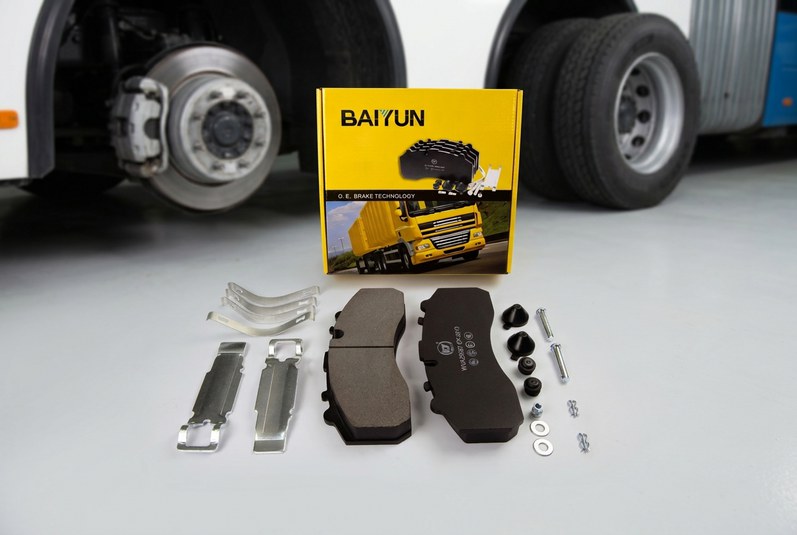
Start with your route and load data. If a supplier quotes a pad without asking about stops per kilometre, axle loading, or brake system type, that's a red flag. The right supplier will ask for duty cycle data, request existing part numbers, and provide current test reports.
For importers and distributors, BAIYUN Brake offers both heavy-duty disc pads and drum linings from an ECE R90 and IATF 16949 framework. You can review the full brake pad product range or request a wholesale quote for your urban bus programme. Tell us your route profile, load assumptions, and existing brake part numbers, and we'll confirm the right specification from our catalogue.
Ready to move? get in touch with our export team with your fleet data and we'll match you with a validated urban bus brake pad or lining specification.
For manufacturer and company information, see About BAIYUN.
Was this article helpful?
Average Rating: 5/5 (145)