
Planning a First Mixed-WVA Brake Pad Stock Order
Summary:
A first mixed WVA brake pad stock order should never start with a generic top-seller list. Importers and distributors of commercial vehicle brakes need a blank worksheet that maps each WVA number to real local truck, bus and trailer demand before committing volume. This technical guide explains how to record historical movement, verify ECE R90 and IATF 16949 supplier credentials, confirm per-line MOQ and lead times, and decide on OEM or private label options for a mixed first order. BAIYUN Brake recommends keeping the worksheet as a living demand log so the second order builds on actual consumption instead of guesswork. The article includes a supplier verification table, a buyer checklist, and five procurement-focused FAQ answers for fleet and wholesale buyers.
Planning a First Mixed-WVA Brake Pad Stock Order
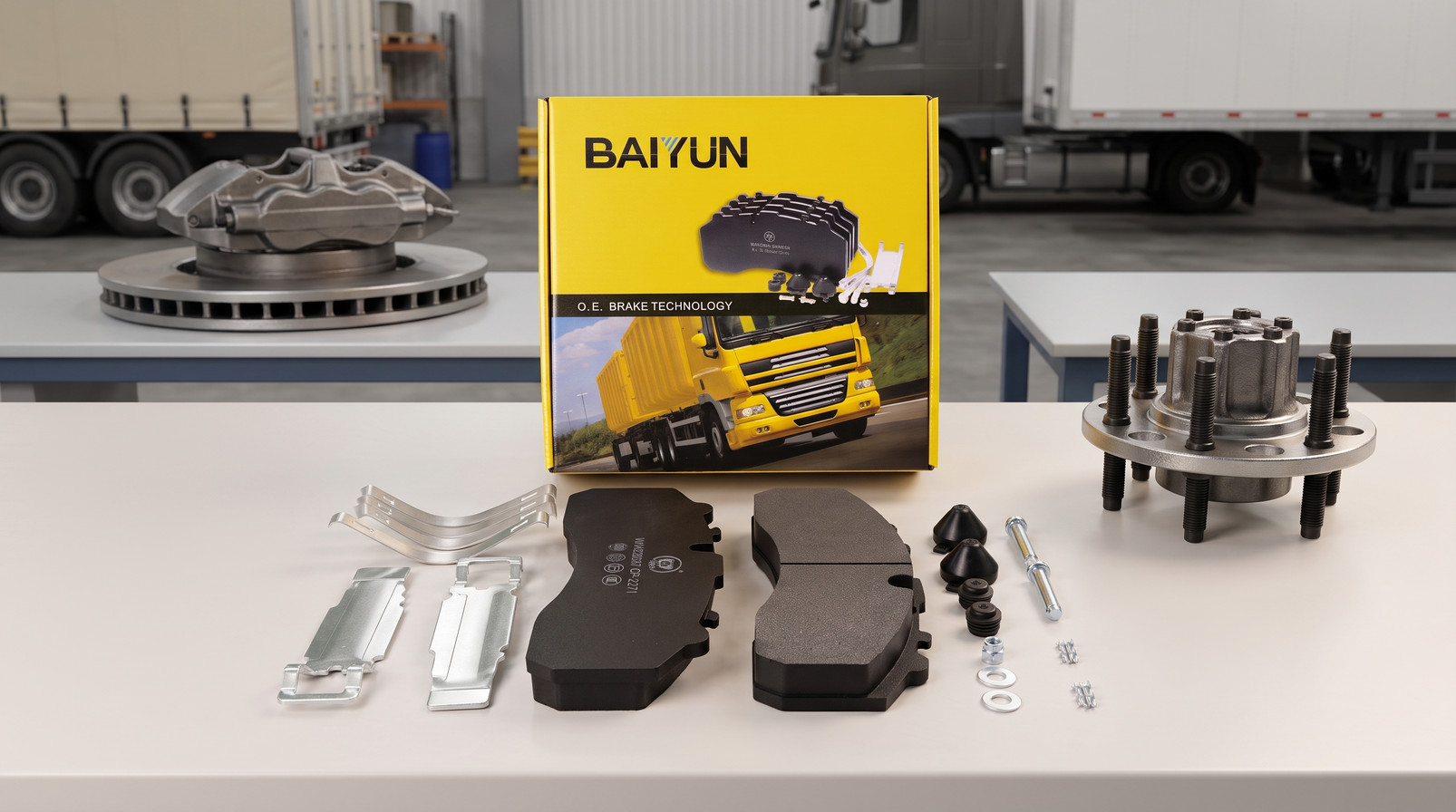
Quick answer: Start with a blank worksheet, not a copied hot-seller list. A first mixed WVA brake pad stock order should be built from your own local fleet vehicle population and historical replacement patterns. List each WVA number, the truck/bus/trailer platforms it fits, and actual movement from your repair records or customer enquiries. Then validate every line against the manufacturer's current catalogue before confirming volume. This keeps your first mixed container aligned with real demand instead of global guesswork.
Why a Blank Worksheet Beats a Pre-Made Ranking
Most first mixed WVA orders go wrong when an importer starts with a supplier's global top-20 list and adjusts from there. That list might reflect European trailer volumes, not your domestic city bus population. You don't need a ranking. You need a record of what actually rolls through your customers' workshops.
Set up a simple sheet with these columns: WVA number, vehicle make and axle, annual replacement count, current stock, lead time in days, and any cross-reference notes. Leave the first row empty until you have a real enquiry or a confirmed fitment. This is the opposite of a forecast. It's a demand log. Every time a customer sends a WVA enquiry, add it to the sheet even if you don't buy immediately. Over three months, the pattern usually becomes clear.
Try to get at least 12 months of movement data before ordering. If you only have six months, double the numbers for the first buy but keep the order flexible. For example, if Line A moved 120 sets in six months, a first buy of 240 sets is an illustrative starting point, not a fixed rule.
We've heard from distributors who skipped this step and ended up with 18 months of stock for a WVA number that fits one discontinued city bus model. That's expensive warehouse space that could have gone to a fast-moving trailer pad. Once your worksheet is ready, get pricing for commercial vehicle brake pads and validate each WVA line against the current catalogue.
What Supplier Certifications Should You Check Before the First Mixed Order?
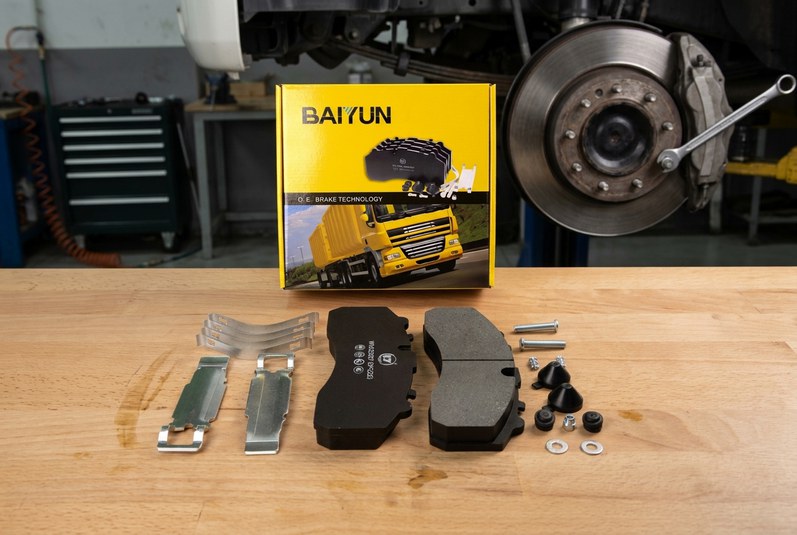
A mixed WVA order multiplies your exposure. One wrong number in a 15-line order is a nuisance. Ten wrong numbers is a container problem. So before you commit, check how the manufacturer manages approval scope.
Ask for current approval documents per WVA line. ECE R90 approval confirms the pad passed regulatory brake performance testing for the stated vehicle applications. IATF 16949 certification tells you the production system meets automotive quality management requirements. A manufacturer can hold IATF 16949 for the plant but still need line-by-line ECE R90 evidence for each WVA number you plan to stock. Ask for the test report number and the vehicle application list on the same page. If a supplier hesitates to share per-line approval details before an order, treat that as a red flag. Legitimate manufacturers keep those records ready for export customers.
Don't accept a certificate that lists one WVA family and assume it covers another. Always confirm with supplier catalogue. At BAIYUN Brake, our IATF 16949 certified facility follows batch traceability from raw material mixing to finished pad, which matters when you're importing a mixed container.
How Do MOQ and Lead Time Actually Work for a Mixed First Order?
The first mixed order is rarely about getting the absolute lowest unit price. It's about getting a container that doesn't strand your cash in slow-moving lines. Most manufacturers will set a minimum order quantity per WVA number, not just per container. That's the first number to pin down.
Then confirm whether you can mix different WVA numbers within one 20-foot or 40-foot container and still hit the per-line MOQ. Some lines may be produced on different presses or curing batches, which affects packaging and lead time. You'll also want to know if the supplier holds semi-finished backing plates or needs to schedule a production run from scratch. Also check whether the supplier allows split shipments from different production batches within the same container. This matters when one WVA line is made on a dedicated press and another shares tooling.
| Order parameter | Why it matters | What to confirm |
|---|---|---|
| Per-line MOQ | Locks cash into each WVA number | Confirm with supplier catalogue |
| Mixed container policy | Determines if first order can spread across lines | Ask for container loading plan |
| Lead time to ETD | Sets your safety stock trigger | Confirm current production schedule |
| Packaging format | Impacts warehouse handling and branding | Confirm box, label, pallet spec |
| Documentation set | Needed for customs and customer trust | ECE R90 copies, data sheets, batch trace |
Once those variables are confirmed, you can download our product catalogue to check current WVA coverage and plan the first container layout.
What OEM and Private Label Choices Make Sense on a First Run?
A first mixed order is also the right time to decide whether you want the supplier's standard brand, a neutral box, or your own private label. Some importers start with the manufacturer's brand to test fitment, then switch to private label for the repeat order. Others go straight to their own label if they already hold market trust in the region.
BAIYUN Brake supplies both OEM and private label packaging for commercial vehicle brake pads. If your mixed order includes drum brake shoes or linings, request a quote for commercial vehicle brake linings separately. What matters for a mixed order is that each WVA line uses the same packaging barcode structure, so your warehouse team doesn't receive 12 different label formats in one container. If you choose private label, factor artwork approval time into the lead time. A first order with 12 private label SKUs can add two to three weeks before production starts, depending on print proof cycles.
If you plan to sell to fleets, ask for a neutral technical data sheet per WVA number. That saves you from answering the same friction material questions for every tender. Frankly, the private label decision should follow the demand data, not lead it.
What Should You Verify Before Signing the First Mixed Order?
After you've built the worksheet and checked the supplier basics, run through this list before issuing the purchase order. This is the point where mistakes get expensive.
- Each WVA number on your worksheet matches a current, confirmed vehicle application in the supplier's catalogue.
- ECE R90 approval exists for each line, not just for the brake pad family.
- All WVA numbers are available in the same friction material unless you have a specific reason to split formulations.
- The supplier's batch traceability covers mixed production runs without losing line identity.
- Per-line MOQ, total container volume and lead time are confirmed in writing.
- Packaging and private label artwork have been approved for all lines.
- You have kept the blank worksheet as the source of truth for stock reorder points.
Get a written confirmation email that lists every WVA number, quantity, label format, and approval document reference. That single email becomes your order baseline if anything is disputed later. If any item is missing, pause. The cost of a wrong mixed container is always higher than the cost of a few extra days of verification.
How Do You Turn the First Order Into a Repeatable Stock System?
Your first mixed order shouldn't be a one-off puzzle. Once it lands and starts moving, the worksheet becomes your reorder engine. Record actual consumption by WVA number every month. If Line C sells through in eight weeks when you planned sixteen, you know the second order needs a higher weight. If Line D hasn't moved after ninety days, cut it from the next order and investigate.
Don't treat the worksheet as a static document. Add columns for warranty claims, fitting issues, and customer feedback. That turns it into a living demand log that future orders are built from. Run the worksheet review monthly for the first quarter. That's enough to see early sell-through patterns before the reorder window closes. The distributors who get this right rarely overstock after the second buy.
When you're ready to reorder, why choose BAIYUN Brake becomes obvious: we can hold the same WVA line with consistent batch numbers and documentation across repeat orders, which keeps your stock system clean.
Frequently Asked Questions for Importers and Distributors
Q: What is the biggest mistake importers make on a first mixed WVA order?
A: They copy a global hot-seller list instead of building a local demand log. That leads to slow-moving WVA lines and stranded warehouse stock. Start with a blank worksheet tied to actual fleet repair records.
Q: How many WVA numbers should a first mixed order include?
A: There's no fixed number. Focus on lines you can confirm against local vehicle population and current supplier catalogue. A first order with 6-10 well-verified WVA numbers often performs better than 40 guessed lines.
Q: Does every WVA number need its own ECE R90 approval?
A: Yes, ECE R90 approval is application-specific. One certificate for a related family does not automatically cover another WVA number. Confirm each line with the supplier catalogue.
Q: Can I mix truck and trailer WVA numbers in one first order?
A: Yes, a mixed order can cover trucks, buses and trailers. The key is separating the worksheet by vehicle type and axle position so reorder points stay clear.
Q: What documentation should I keep for each WVA line?
A: Keep the ECE R90 approval copy, material data sheet, current catalogue page, batch traceability record and your own consumption log. That covers customs, fleet tenders and future reorder decisions.
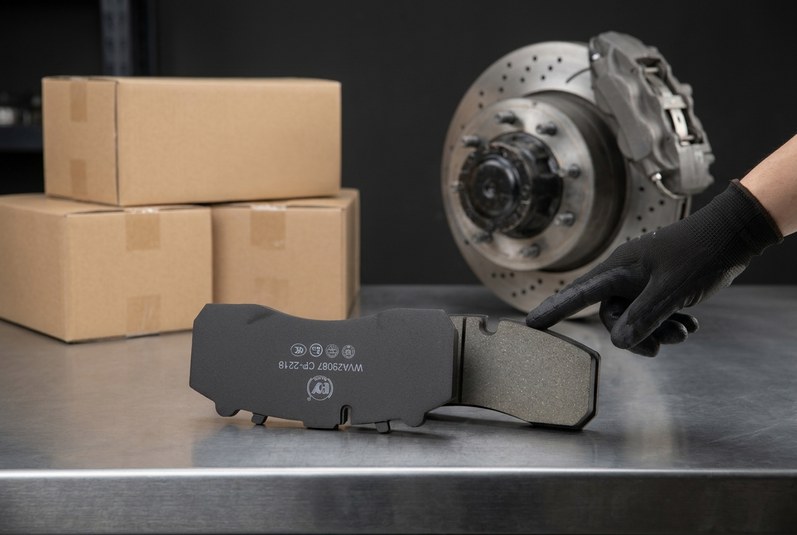
When you're ready to turn that worksheet into a confirmed mixed stock order, start with the two product lines most importers combine: request OEM commercial vehicle brake pad quote and wholesale CV brake lining inquiry. Send the completed worksheet with WVA numbers, annual movement and target quantities, and request a wholesale quote from our export team.
For manufacturer and company information, see About BAIYUN.
Was this article helpful?
Average Rating: 5/5 (154)