
Long-Haul Fleet Brake Pads: Comparing Cost per Kilometre
Summary:
Long-haul fleet brake pad cost per kilometre is the metric fleet managers and importer distributors should use to compare commercial vehicle brake pads. This article explains how to calculate true cost per kilometre by adding pad price, labour, and downtime, then dividing by actual service life. Premium air disc pads at $350 lasting 96,000 km produce about $0.0036/km, while budget pads at $200 lasting 48,000 km produce about $0.0042/km. The article includes a worked cost table, buyer verification checklist, ECE R90 and IATF 16949 guidance, and practical sourcing questions for commercial vehicle brakes. BAIYUN Brake supplies heavy-duty brake pads and linings to fleets and distributors. Request a wholesale quote after reviewing test reports and fitment data. This technical guide is for fleet procurement teams, importers, and distributors sourcing long-haul truck and trailer friction.
Long-Haul Fleet Brake Pads: Comparing Cost per Kilometre
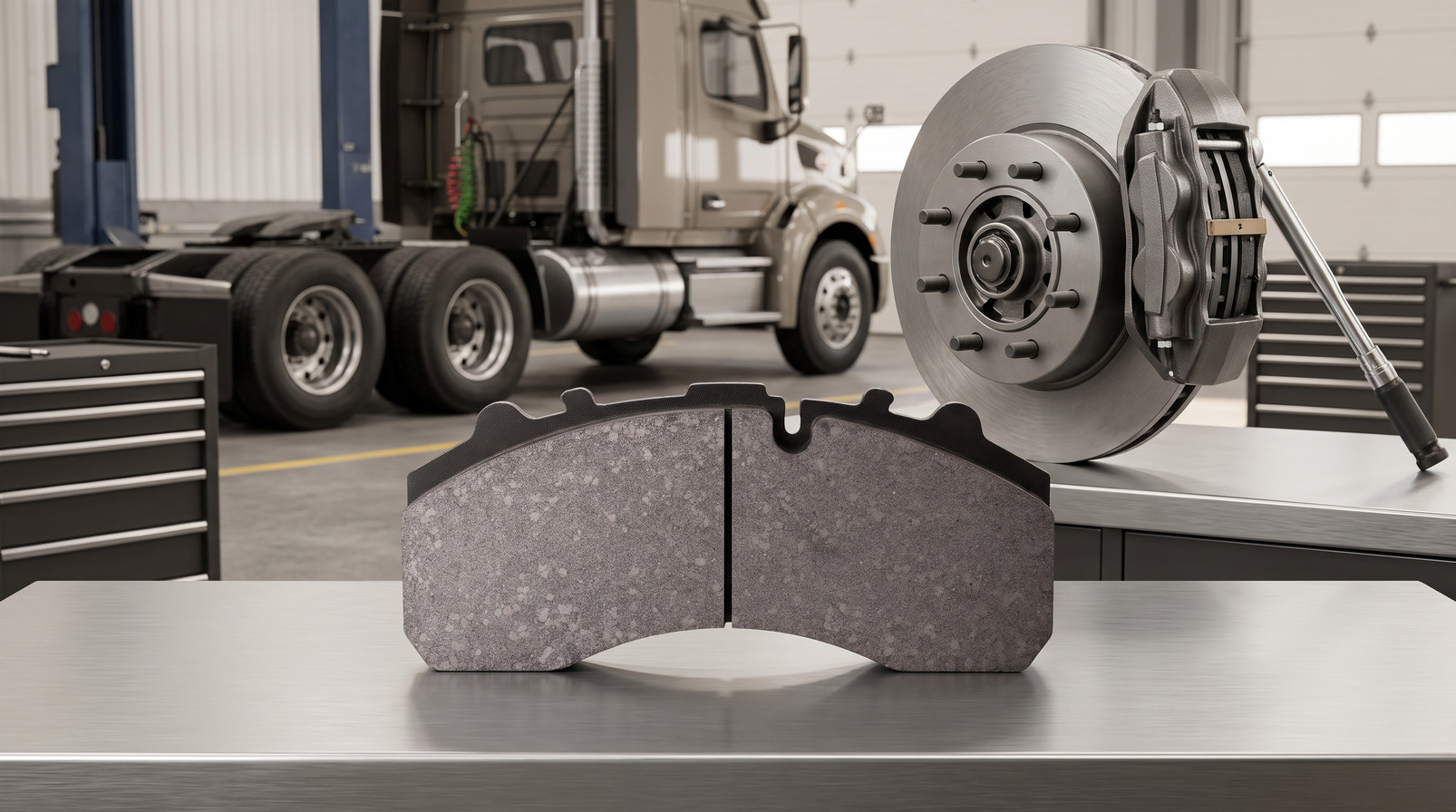
Quick answer: Long-haul fleet brake pad cost per kilometre is calculated by dividing pad price plus labour and downtime by the kilometres between replacements. For example, premium air disc pads at $350 per axle lasting 96,000 km produce about $0.0036/km in pad cost, while budget pads at $200 lasting 48,000 km produce about $0.0042/km. The real difference widens when labour and downtime are added. Fleets should verify ECE R90 compliance, friction consistency, and wear life claims with dynamometer data, not catalogue promises.
A highway tractor running 200,000 km a year doesn't wear brakes the way a local delivery truck does. Long descents, high axle loads, and constant highway speed put more heat into the pads, and that heat changes the economics. Fleet buyers and importers need to compare long haul fleet brake pad cost per kilometre across the expected service life, not just purchase price. All dollar figures in this article are illustrative except where noted. Your regional labour rates, duties, and downtime costs will move the final number.
BAIYUN Brake supplies commercial vehicle brake pads and linings to distributors and fleet procurement teams. You can browse our heavy-duty brake pad range for air disc and drum applications. The numbers below will help you build a working cost model before you commit to a supplier.
How Do You Calculate Long-Haul Fleet Brake Pad Cost per Kilometre?
The formula isn't complicated. Take the pad cost per axle, add the labour cost per replacement, add the revenue or vehicle downtime cost, then divide that total by the kilometres the pad actually lasts. The result is your true cost per kilometre. Most fleets get the first number and forget the other two. That's why a cheap brake pad can be the most expensive option on a highway tractor.
For a single axle running air disc brakes, a $350 premium pad set lasting 96,000 km gives a pad-only cost of $0.0036/km. A $200 budget set lasting 48,000 km gives $0.0042/km. Add labour and downtime of $180 per replacement, and the premium option moves to roughly $0.0055/km while the budget option moves to about $0.0079/km. These figures are illustrative. But the relationship holds: shorter replacement intervals multiply labour costs and vehicle off-road time.
Long-haul fleets also have to factor in the risk of an early failure. A pad that wears unevenly or fades on a mountain route can force an unscheduled stop, which costs far more than the part itself. Brake maintenance cost analysis is a useful place to model total cost of ownership across different duty cycles.
What Actually Drives Long-Haul Brake Pad Costs Beyond Invoice Price?
Fleet procurement managers look at three cost buckets: the pad price, the replacement labour, and the vehicle downtime. In highway operation, downtime is often the biggest hidden cost. A tractor parked for a brake job isn't earning revenue. If a fleet runs 11 hours a day at a margin of $80 per hour, a three-hour brake service carries a $240 downtime cost. That's before the technician's labour.
Brake type matters too. Industry estimates for 2026 put air disc brake pad replacement at $150 to $300 per axle, while drum brake shoes run $100 to $200 per axle. Air disc brake work often carries $300 to $500 more per axle than drum when you include caliper handling and rotor inspection. Drum systems may have cheaper parts but can involve S-cam bushing work, brake chamber rebuilds, or drum machining on older trailers. Those extras eat into the apparent savings.
For an importer or distributor, the real comparison goes further. You need consistent friction materials, batch traceability, and approval documentation. A low-cost pad that varies from container to container creates warranty claims and end-user complaints. That's why certified suppliers matter. BAIYUN Brake manufactures under IATF 16949 certified facility controls and supplies ECE R90 approved commercial vehicle friction. The certificate only matters if the exact part number is covered, so always verify approval scope.
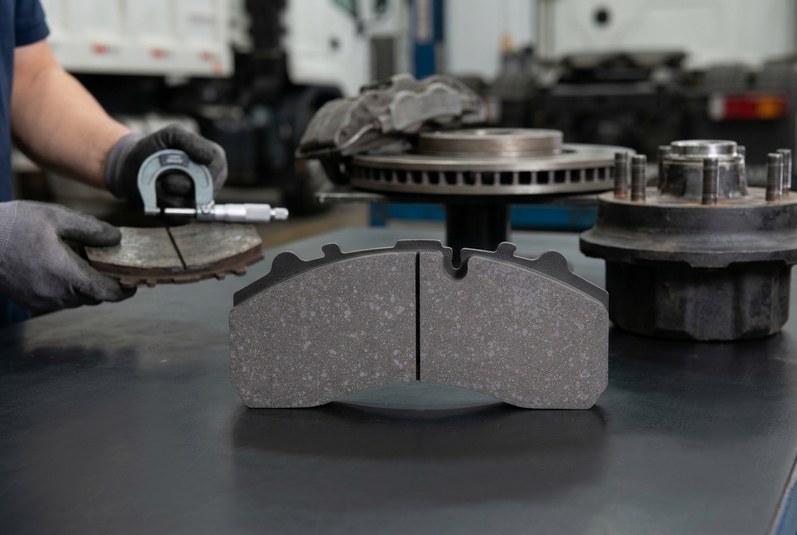
How Do Premium and Budget Heavy-Duty Brake Pads Compare per Kilometre?
The table below is a worked example for a single axle on a long-haul highway tractor. It uses 2026 US shop labour and downtime assumptions. It's not a BAIYUN Brake guarantee of pad life. Treat it as a model you can adjust with your own fleet data.
| Cost Input | Premium Air Disc Brake Pads | Budget Air Disc Brake Pads |
|---|---|---|
| Pad cost per axle | $350 | $200 |
| Illustrative service life | 96,000 km | 48,000 km |
| Labour per replacement | $120 | $120 |
| Downtime cost per replacement | $60 | $60 |
| Total per replacement | $530 | $380 |
| Pad cost per km | $0.0036 | $0.0042 |
| Total cost per km | $0.0055 | $0.0079 |
Some fleets will see a bigger gap. Heavy loads, mountainous routes, and high brake temperatures accelerate budget pad wear faster than premium formulations. Conversely, a local delivery truck that stops every few hundred metres may never reach the thermal zone where premium friction pays off. Long-haul fleets should model both scenarios before making a sourcing decision.
So what does that mean for your bottom line? A truck idled by cheap pads can erase the savings in one unscheduled stop. The cost per kilometre formula only works when you include realistic wear life and downtime. That's where many supply decisions go wrong.
What Should Fleet Buyers Check Before Sourcing Long-Haul Brake Pads?
Start with the friction material. In heavy-duty highway use, you want stable friction from about 100°C to 350°C. Some budget formulations look fine cold but fade when the disc reaches repeated braking temperatures on long grades. Ask for a dynamometer friction curve, not just a single coefficient of friction number. A pad that holds 0.38 to 0.42 across the working range is easier to predict than one that spikes at low temperature and falls off sharply.
Then check wear rate. A lab report should show mass loss or thickness loss over a defined test cycle. If a supplier won't share wear data, you're buying blind. That doesn't work for a distributor who may stock 500 or 2,000 sets at a time. Commercial vehicle brake pad test reports help verify basic material properties and wear performance before you order samples.
Fitment is the next step. Do not rely on a vague model list or a photo. Confirm the exact part number and fitment with the supplier catalogue. For drum brake linings, check width, thickness, and rivet hole pattern. For air disc pads, check backing plate shape, pad thickness, and caliper compatibility. Wrong fitment in a fleet environment means a truck sitting on a lift while the right part ships overnight. If you need commercial vehicle brake linings, you can request a quote for commercial vehicle brake linings with your target axle and application data.
Frankly, the price gap between certified and uncertified pads rarely justifies the warranty risk. An importer who gets hit with a batch of non-conforming parts loses more than margin; they lose distributor confidence and end-user trust. That's harder to rebuild than a percentage point of margin.
Buyer Verification Checklist for Long-Haul Fleet Brake Pad Procurement
- Request ECE R90 approval documentation for the exact part number, not a generic factory certificate.
- Confirm IATF 16949 and ISO 9001 certification for the manufacturing site.
- Ask for a dynamometer friction curve covering at least 100°C to 350°C.
- Ask for wear-rate data under a defined test cycle, not a supplier estimate.
- Check batch-lot traceability and incoming raw-material inspection records.
- Verify pad thickness, backing plate dimensions, and caliper fitment with the supplier catalogue.
- Calculate total cost per km using your own labour rate and downtime cost.
- Run a field test on a small fleet segment before committing to a full container.
- For drum applications, confirm lining width, thickness, and rivet hole pattern.
Summary: A buyer who verifies friction stability, wear data, approval scope, and true cost per km will outlast a buyer who chases the lowest invoice price.
Frequently Asked Questions About Long-Haul Fleet Brake Pad Cost
Q: How do I calculate long haul fleet brake pad cost per kilometre for my trucks?
A: Add the pad cost per axle, labour per replacement, and downtime cost, then divide by the actual kilometres between replacements. For example, $350 pads lasting 96,000 km with $180 labour and downtime produce about $0.0055/km. Using your own fleet's labour rate and downtime value gives the most accurate figure.
Q: Should I buy budget or premium brake pads for long-haul highway tractors?
A: Premium pads often deliver a lower cost per kilometre on highway tractors because the longer service life reduces the number of replacement events. A $350 pad lasting 96,000 km costs $0.0036/km in pad spend, while a $200 pad lasting 48,000 km costs $0.0042/km. The advantage grows when you add labour and downtime.
Q: What certifications matter when importing commercial vehicle brake pads?
A: Look for ECE R90 approval covering the specific part number, plus IATF 16949 and ISO 9001 certifications for the manufacturing facility. ECE R90 confirms the pad's braking performance is close to the original within regulated limits. Verify the approval scope directly with the supplier.
Q: How can importers verify wear life claims from a Chinese brake pad supplier?
A: Ask for dynamometer wear test reports and material data sheets that show thickness or mass loss under a defined cycle. Compare those results across batches. A supplier like BAIYUN Brake can provide commercial vehicle brake pad test reports for review. Then run your own field test before bulk ordering.
Q: What WVA or OE cross reference should I use when ordering fleet brake pads?
A: Do not assume a WVA number is correct without checking the supplier catalogue. WVA and OE cross references can vary by caliper, axle, and region. Confirm with supplier catalogue. BAIYUN Brake recommends validating fitment with a sample set before container-level orders.
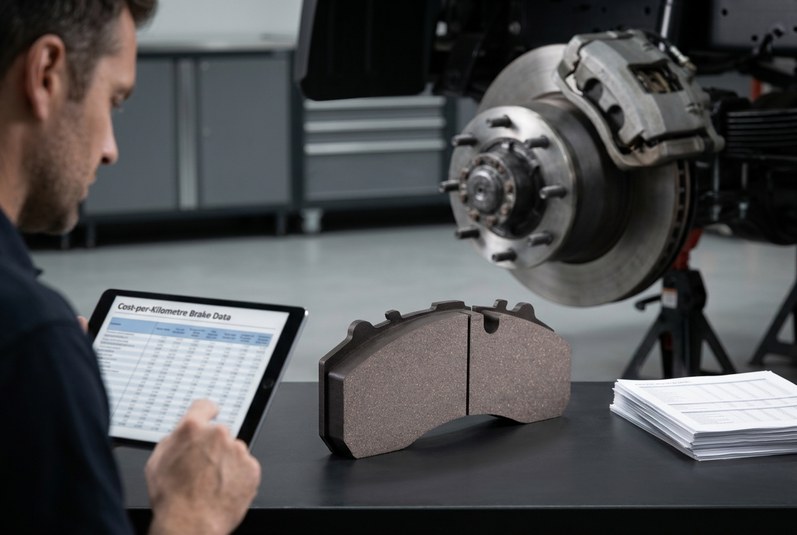
Fleet procurement isn't won on the cheapest pad. It's won on the lowest verified cost per kilometre, which includes pads, labour, downtime, and warranty risk. If you're comparing long-haul brake pad suppliers, get the dynamometer data and ECE R90 approval scope before you run a field test. Then model your own operational costs, not the supplier's assumptions. BAIYUN Brake is an IATF 16949 and ECE R90 certified manufacturer, offering CV brake pad catalog for distributors and OEM brake lining solutions. When you're ready, request a wholesale quote with your fleet size and annual mileage. Our export team can provide test reports and samples for evaluation.
For manufacturer and company information, see About BAIYUN.
Was this article helpful?
Average Rating: 5/5 (106)