
HDA Truck Pride adds Dinex Emission as supplier partner – Fleet Equipment Magazine
Summary:
HDA Truck Pride adds Dinex Emission as supplier partner - Fleet Equipment Magazine reports the aftermarket group expanded its aftertreatment category with a Denmark-based exhaust and emission control manufacturer. For commercial vehicle brake distributors and fleet maintenance teams, the move signals something bigger: aftermarket sourcing rewards suppliers who combine certifications, inventory depth, and clear documentation. This guide explains what fleet buyers, distributors, and maintenance teams should verify when sourcing commercial vehicle brake pads and linings. Key checks include IATF 16949 certification, ECE R90 approval for specific WVA references, batch friction consistency, MOQ, lead time, and private label options. BAIYUN Brake offers IATF 16949 certified manufacturing and ECE R90 approved commercial vehicle brake formulations for export programs. Request a wholesale quote from the contact page.
HDA Truck Pride adds Dinex Emission as supplier partner - Fleet Equipment Magazine
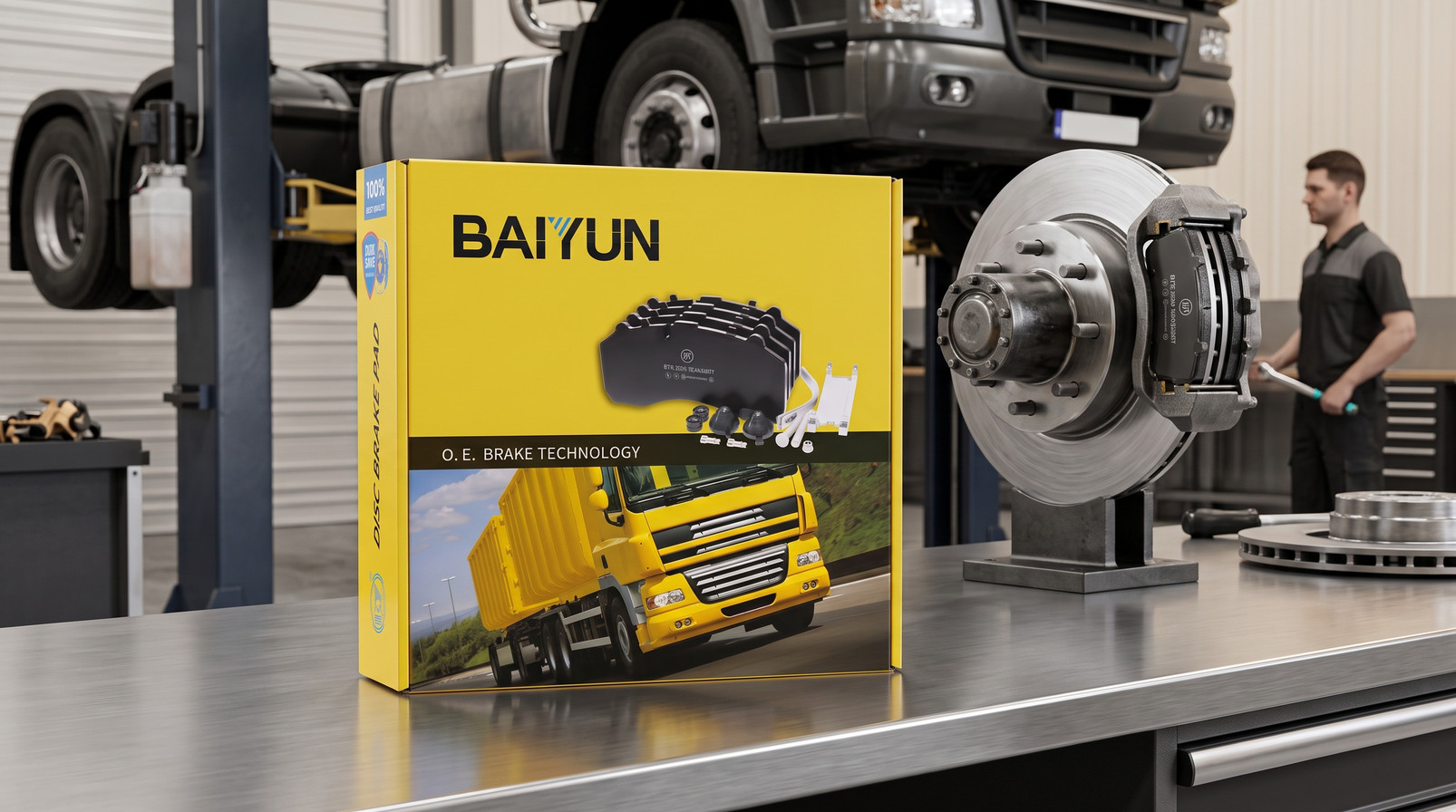
Quick answer: HDA Truck Pride adds Dinex Emission as supplier partner - Fleet Equipment Magazine reports the aftermarket group expanded its aftertreatment category with a Denmark-based exhaust and emission control manufacturer. For fleet buyers, distributors, and maintenance teams, this means broader access to DPF, DOC, and pipe treatment components through existing members. The same qualification discipline applies to commercial vehicle brake sourcing: verify IATF 16949, ECE R90, WVA references, batch consistency, and lead times before committing volume.
Why an Aftertreatment Supplier Move Should Matter to Brake Buyers
Aftertreatment is one of the fastest-growing categories in commercial vehicle parts. HDA Truck Pride didn't add Dinex because the exhaust market is shrinking. They did it because fleets are holding trucks longer, emissions systems are aging, and DPF, DOC, and pipe treatment work has turned into a repeat revenue line for distributors. Maintenance directors want fewer suppliers who can cover more of the truck, not a separate vendor for every component group.
North American aftermarket distributors regularly rank aftertreatment among their top three growth lines, with annual growth estimates in the 8–12% range for heavy-duty replacements. That's real money moving into emission control parts. For brake buyers, the lesson isn't about exhaust hardware itself. It's about supplier depth. A distributor that handles emissions hardware and friction materials under one roof reduces freight costs, simplifies warranty processes, and keeps fleets from bouncing between vendors during PM cycles.
If you're sourcing commercial vehicle brake pads or linings, your supplier's ability to demonstrate certification discipline, inventory depth, and clear documentation matters just as much as price. The fastest-growing fleets don't award business to the cheapest quote. They award it to the supplier who can answer technical questions on the first call and back up the catalog with test data.
What Certifications Do You Actually Need for Commercial Vehicle Brake Pads and Linings?
Imagine a distributor receives two brake pad samples. Both look identical, both claim to fit the same heavy-duty caliper. One carries an ECE R90 approval for the specific WVA reference. The other doesn't. Which one survives a roadside inspection in an R90-adopting market or a warranty audit from a national fleet? You already know the answer.
For commercial vehicles, the baseline should be IATF 16949 certified facility manufacturing, not just a trading company with a good catalog. IATF 16949 forces process control, raw material traceability, and corrective action discipline. ECE R90 is the market access ticket for EU and many export destinations. ISO 9001 is the minimum, but it doesn't prove friction consistency. SAE J2522 dynamometer testing gives you real-world effectiveness, speed sensitivity, and fade behavior data—exactly what fleet maintenance teams need when comparing pad formulations.
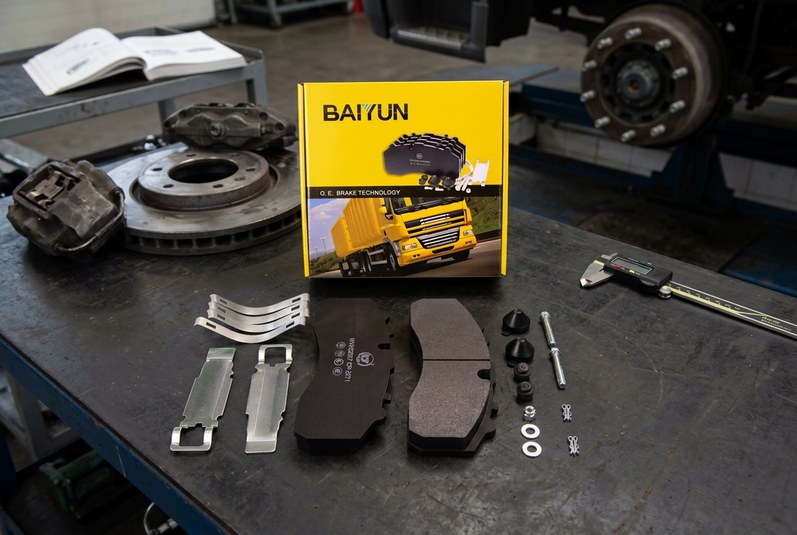
BAIYUN Brake operates an IATF 16949 certified plant and supplies ECE R90 approved commercial vehicle brake formulations for export aftermarket programs. When a manufacturer can show you the WVA reference and the test report up front, that's a supplier worth shortlisting. You can browse our heavy-duty brake pad range to see how certification translates into a real product program.
MOQ, Lead Time, and Logistics: What a Manufacturer Should Tell You Up Front
Nothing frustrates a fleet maintenance manager faster than a 60-day lead time on a wear item. If a truck is down for brake relining and the liner supplier didn't stock the WVA reference, that rig sits. For distributors, that means lost sales and an angry customer. So when you're evaluating a commercial vehicle brake supplier, ask for written lead times, not promises.
Typical questions that separate serious manufacturers from box movers: What's the minimum order quantity for your standard range? Can you mix WVA references in one 20-foot or 40-foot container? Do you hold safety stock for fast-moving truck and trailer applications? How do you handle seasonal demand spikes before winter and summer inspection cycles? If the supplier hesitates, move on.
In our experience, a well-run export manufacturer should quote 25–35 days for standard production orders and 10–15 days for stocked fast-moving references. Those numbers shift during peak seasons, but the supplier should tell you that before you sign the order, not after the vessel leaves. BAIYUN Brake supports distributor programs with documented lead times, flexible container loading, and request a quote for commercial vehicle brake linings that include batch-level friction documentation. That's the kind of detail fleets value when they're running 500 trucks across three regions.
OEM and Private Label Options: How to Compare Brake Suppliers the Right Way
Private label isn't just slapping your logo on a box. It's about WVA reference accuracy, material data sheets, packaging durability, and consistent part numbering across export markets. A distributor building a house brand needs a manufacturer that treats private label as an engineering task, not a print job.
Here's a comparison framework we use when talking with international buyers:
| Sourcing criterion | What to ask | Why it matters for fleet programs |
|---|---|---|
| ECE R90 status | Do you hold current approval for the exact WVA reference? | Avoids non-compliant imports in R90-adopting markets |
| Batch friction consistency | Can you provide SAE J2522 or equivalent dynamometer data per batch? | Reduces brake imbalance complaints and warranty exposure |
| Material traceability | Do you offer PPAP-level documentation and raw material batch records? | Supports IATF 16949 audit requirements for fleets and OEM tenders |
| Lead time | What's the confirmed lead time for mixed-container orders? | Prevents stockouts during peak maintenance seasons |
| Private label MOQ | What's the minimum order for branded boxes and laser marking? | Protects distributor margins without tooling surprises |
Notice the pattern. Every row points back to documentation and process control. That's what HDA Truck Pride's supplier addition signals for the broader aftermarket: mature distributors want partners, not transactions. A price-only supplier might win the first trial order, but they rarely survive the first warranty cycle or the first audit.
One more point on private label. If you're going to invest in branded packaging, verify whether the manufacturer provides material data sheets for each formulation, not just a generic PDF. That document set becomes your defense in a warranty claim and your reference point in future price negotiations.
Buyer Verification Checklist for Commercial Vehicle Brake Pads and Linings
Before you commit to a container order, run through this checklist. We've built it from years of export experience and fleet warranty conversations.
- Confirm the manufacturer holds a current IATF 16949 certificate and the scope covers commercial vehicle friction materials.
- Ask for ECE R90 approval documents for the specific WVA references you plan to stock, not a generic company certificate.
- Request a recent dynamometer report for the pad or lining formulation—SAE J2522, J2430, or equivalent.
- Verify batch traceability: can the supplier map each production lot to raw material receipts and process parameters?
- Check lead time commitments in writing, including mixed-container and seasonal order scenarios.
- Ask about private label packaging, minimums, and whether laser marking or inkjet branding is included.
- Get a sample order with a pre-shipment inspection report before placing a full production run.
You don't need a 20-page RFQ. You need clear answers to these seven points. A supplier that can't answer them in the first call probably won't improve after you sign the contract. For more on what separates a trusted brake pad supplier from a price-only trader, review our competitive advantages.
Once you've qualified the supplier, follow a proper brake lining installation guide to protect fleet uptime. Installation errors can destroy the friction material's performance, even if the pad itself was perfectly manufactured.
Frequently Asked Questions About Sourcing Commercial Vehicle Brakes
Q: What does ECE R90 actually mean for a truck brake pad?
A: ECE R90 is a European regulation that requires replacement brake pads and linings to stay within specified friction performance and cold effectiveness limits when tested against the original equipment reference. For distributors exporting to Europe, the Middle East, Africa, and parts of Asia, R90 approval is often mandatory for legal sale.
Q: How do I confirm the correct WVA reference for a heavy-duty application?
A: WVA numbers identify the pad or lining by dimensions, friction material type, and backing plate or shape family. You should always cross-check the WVA reference against the vehicle manufacturer's part number and the brake caliper model. If the data isn't supplied, confirm with supplier catalogue before you order.
Q: Why is IATF 16949 more important than ISO 9001 for fleet brake sourcing?
A: ISO 9001 confirms a quality management system exists. IATF 16949 adds automotive-specific requirements for defect prevention, continuous improvement, and supply chain traceability. For commercial vehicle brake pads, IATF 16949 is the standard serious OEM and large fleet tenders expect.
Q: What's a reasonable MOQ for private label commercial vehicle brake pads?
A: It varies by WVA reference and packaging complexity. Many export manufacturers start around 500–1,000 sets per reference for standard packing, but private label boxes and laser marking can push MOQs higher. Always confirm mixed-container loading to reduce freight cost per unit.
Q: How do I evaluate batch-to-batch friction consistency before committing to a supplier?
A: Request dynamometer test reports from multiple production batches, not just one golden sample. Look for friction coefficient variation within ±0.03 across the operating temperature range. A supplier that can't provide batch-level data may still be trading products, not manufacturing them.
What This Means for Your Next Brake Sourcing Decision
The Dinex addition to HDA Truck Pride reminds us that aftermarket partnerships are won on technical depth and distribution reach, not just parts catalogs. Brake buyers should apply the same screen. If a manufacturer can't show certifications, WVA documentation, and honest lead times, the price advantage won't survive the first warranty claim.
BAIYUN Brake brings 49+ years of friction manufacturing experience to commercial vehicle programs. We work with distributors and fleets on download our product catalogue to match the right WVA references to your market. When you're ready to build a brake program that stands up to fleet inspection, request a wholesale quote from our export team.
Was this article helpful?
Average Rating: 5/5 (224)