
Future Development Trends of the Global Brake Pad Market (2026–2030): Technological Innovation and Green Transformation Drive Industry Restructuring
Summary:
Future Development Trends of the Global Brake Pad Market (2026–2030): Technological Innovation and Green Transformation ...
Future Development Trends of the Global Brake Pad Market (2026–2030): Technological Innovation and Green Transformation Drive Industry Restructuring
As the global automotive industry accelerates toward electrification, intelligence, and lightweight design, the brake system—one of the most critical safety assemblies—is entering a new cycle of transformation. Over the next five years, the brake pad industry will experience multi-dimensional restructuring driven by EV adoption, environmental compliance, material innovation, smart monitoring, and regional channel evolution.
Below are the key trends shaping the global brake pad market from 2026 to 2030, along with practical actions for manufacturers, distributors, and fleet buyers.
1) EV Growth Is Reshaping Brake Pad Performance Requirements
Electric vehicles typically carry higher vehicle mass due to batteries, while regenerative braking reduces the frequency of traditional friction braking. This creates a new market reality:
- Fewer braking events, but
- Higher single-stop load and thermal stress when friction braking is required.
As a result, demand is shifting toward formulations that deliver:
- high temperature stability and fade resistance
- low dust and low noise performance
- stable friction coefficient across a wide temperature window
This is accelerating the upgrade of ceramic composites and advanced NAO formulations, especially for premium passenger cars and performance-oriented applications.
Industry impact: Traditional “cost-first” brake pad competition is increasingly replaced by performance validation, durability, and low emission wear control.
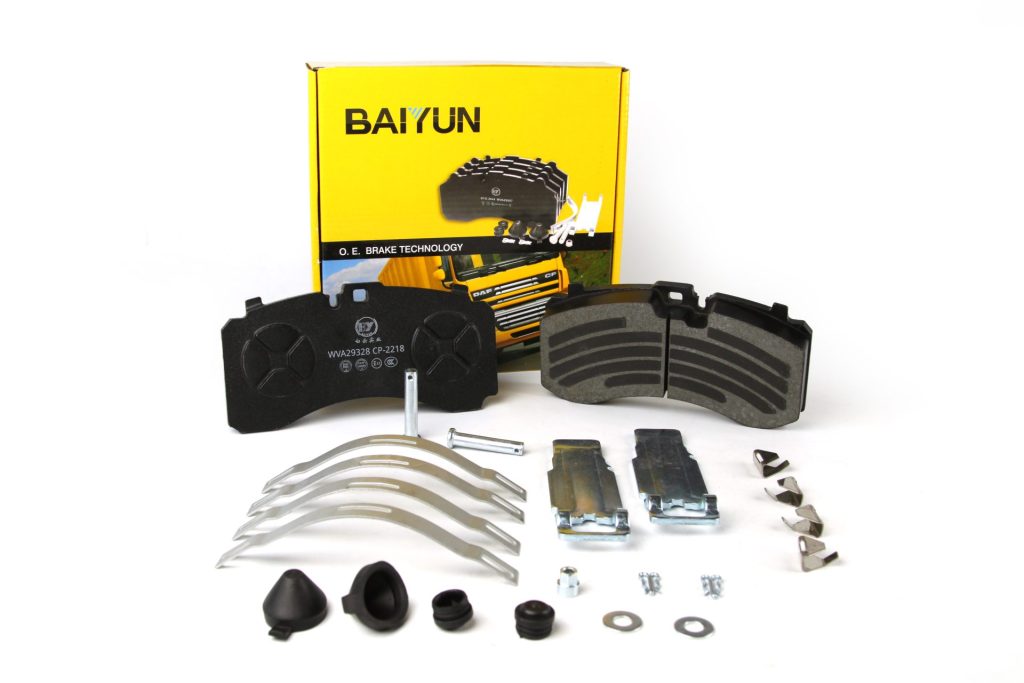
2) Green Transformation Drives Copper-Free and Low-Emission Material Innovation
Environmental pressure is pushing the industry into a new formulation era. Global regulations and buyer requirements are increasingly focused on:
- copper reduction (toward ultra-low copper or copper-free solutions)
- lower brake dust and improved wear particle control
- cleaner production and more sustainable raw material choices
To stay competitive, manufacturers are accelerating:
- copper-free ceramic and NAO recipes
- alternative friction modifiers and heat-management additives
- improved manufacturing consistency to avoid noise, vibration, and harshness (NVH) issues
Industry impact: “Green compliance capability” becomes a core barrier to entry—especially for exporters targeting high-standard markets.
3) Asia-Pacific Remains the Main Growth Engine (Passenger + Commercial + Two-Wheeler)
Asia-Pacific continues to dominate volume growth due to:
- a huge vehicle parc and strong aftermarket replacement cycles
- ongoing industrialization and expanding road transport demand
- rapid growth of EV penetration in key markets
- massive two-wheeler ownership creating stable replacement demand
What this means for exporters: APAC is not only about volume; it’s about fast-moving channels, localized product preferences, and pricing + quality balance. Companies that win will be those with regional distribution networks, flexible SKUs, and stable supply capacity.
4) Smart Brake Pads and Wear Monitoring Move Into the Mainstream
Smart technology is penetrating brake pads through:
- integrated or compatible wear sensors
- real-time wear status feedback for drivers and fleets
- predictive maintenance to reduce sudden failure risk
Smart wear monitoring supports:
- better safety and maintenance planning
- reduced downtime for commercial fleets
- premium pricing and improved margins
Industry impact: Brake pads are evolving from “replacement parts” to “service-enabled components,” creating new value for brands with technology integration and data-driven aftermarket support.
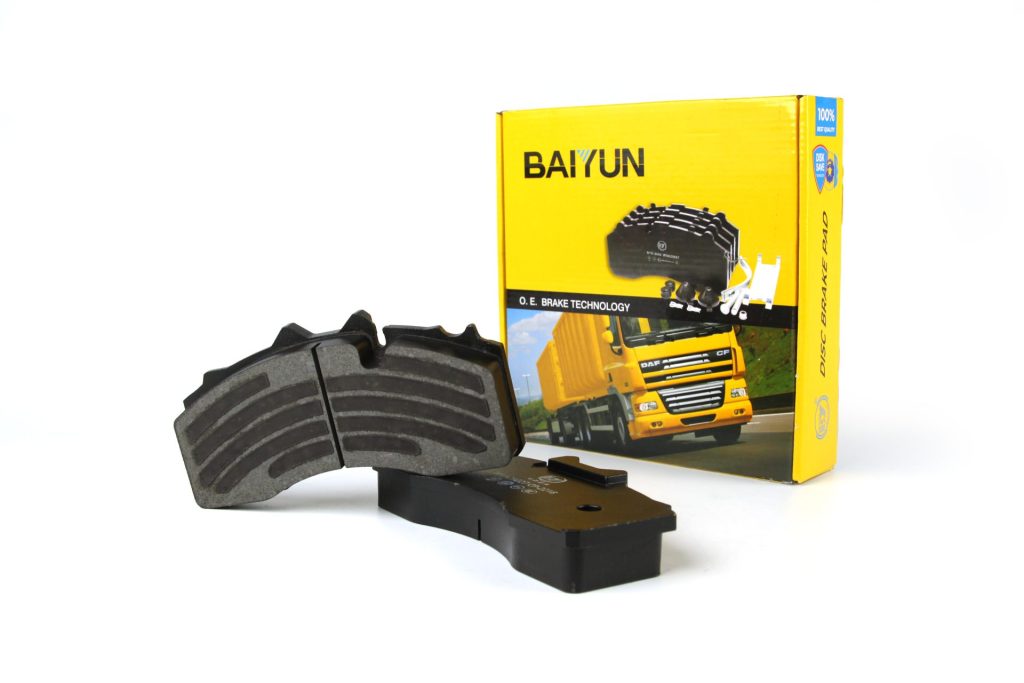
5) Competition Becomes More Intense: Channels, Speed, and Quality Certification Decide Winners
The aftermarket is becoming more transparent and faster:
- direct-to-customer and e-commerce channels continue to expand
- delivery speed and regional inventory become differentiators
- price competition intensifies, especially in standardized SKUs
At the same time, buyers increasingly demand:
- consistent friction performance batch-to-batch
- stable NVH control (noise and vibration)
- reliable quality documentation and testing discipline
- clear market-accepted certifications and compliance readiness
Industry impact: The winning formula becomes “quality + compliance + channel efficiency,” not simply “lowest price.”
Market Outlook (2026–2030): Moderate Growth, Faster Value Upgrade
The brake pad industry is expected to grow steadily over the next five years. However, the faster change is not only in market size, but in value structure—with growth concentrated in:
- EV-oriented premium and low-dust segments
- copper-free/low-emission formulations
- commercial vehicle fleet maintenance solutions
- smart wear monitoring and service integration
What Brake Pad Enterprises Should Do Now
To stay ahead from 2026 to 2030, companies should prioritize:
- Material Roadmap
- low-dust, high-temperature stable ceramic and NAO upgrades
- copper-free/ultra-low copper formulation development
- better NVH control and friction stability across climates
- Compliance & Validation Capability
- strengthen testing discipline and quality consistency
- align product design with target markets’ regulatory trends
- Smart Upgrade
- develop sensor-ready pad designs
- provide fleet-oriented wear management solutions
- Regional Channel Strategy
- focus on APAC growth markets and emerging aftermarket channels
- optimize SKU strategy for fast-moving applications
- build distributor support: catalogs, fitment data, packaging, and training
FAQ
Q1: Why do EVs require upgraded brake pad performance?
EVs are often heavier, and while regenerative braking reduces brake usage frequency, peak braking events can generate higher thermal load. This pushes demand toward stable friction, heat resistance, and low dust performance.
Q2: What does “green transformation” mean in brake pad materials?
It mainly refers to reducing harmful components (such as copper), lowering brake dust emissions, improving wear particle control, and adopting more sustainable and stable formulations.
Q3: Will traditional brake pads be replaced by ceramic pads?
Not entirely. Ceramic formulations are growing, especially in premium segments, but NAO and semi-metallic solutions remain important depending on vehicle type, cost target, and driving conditions.
Q4: Are smart brake pads worth the premium?
For fleets and safety-focused customers, wear monitoring reduces the risk of unexpected failure, supports maintenance planning, and can lower downtime—often justifying the premium.
Looking for an OEM brake pad manufacturer with stable quality, scalable capacity, and export-ready compliance?
Contact Baiyun Brake to discuss your target market requirements, friction level, low-dust material options, and packaging solutions for distributors and wholesalers.
Was this article helpful?
Average Rating: 5/5 (11028)