
Brake Pad Evaluation for Quarry and Tipper Fleets
Summary:
A structured quarry tipper brake pad supplier evaluation starts with field data: dust levels, load cycles, route grades and maintenance records. This technical guide for commercial vehicle brake importers and distributors explains how to compare ECE R90 and IATF 16949 certified suppliers, what documentation to request, and how to avoid buying truck pads that fail early in abrasive quarry service. BAIYUN Brake's commercial vehicle brake pad and lining range supports fleet procurement teams with consistent friction data and verified manufacturing quality. Read the evaluation checklist, technical table and wholesale buyer FAQ before your next sourcing decision.
Brake Pad Evaluation for Quarry and Tipper Fleets
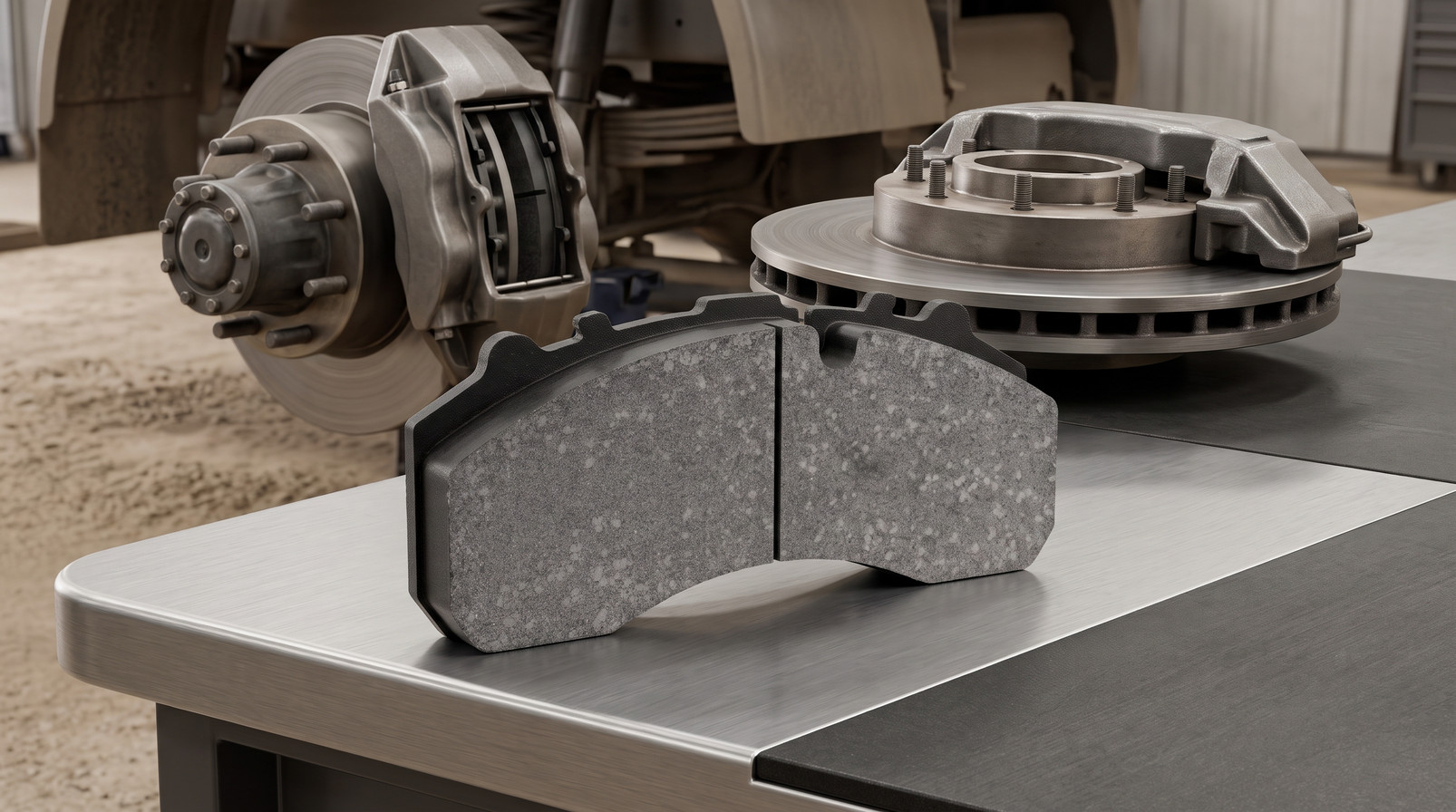
Quick answer: For quarry and tipper fleets, a supplier evaluation only works when it starts with field documentation: dust levels, load cycles, route grades and maintenance records. Don't buy on price alone. Require ECE R90 approval evidence, IATF 16949 manufacturing quality, consistent friction data, and written wear logs from fleets running similar routes. BAIYUN Brake helps importers and distributors verify pad specifications against actual service conditions before committing to container-volume orders.
Why Quarry and Tipper Brake Duty Is Different
A loaded rigid tipper on a limestone quarry haul road can run at 40–70 t GVW, stop repeatedly at loaders and crushers, and descend grades that keep disc temperatures high. Throw in abrasive rock dust, occasional water from wheel wash stations, and uneven loading, and a brake pad faces a very different working life compared with a highway tractor pad.
Dust is the quiet killer. Fine silica and crushed limestone particles pack into caliper guide pins, bridge pad-to-disc clearances, and accelerate abrasive wear on pad friction material. When a fleet doesn't wash the chassis regularly, that dust becomes a grinding paste every time the brakes cycle. You'll see edge scoring, taper wear, and glazing that no highway brake test will predict.
BAIYUN Brake's heavy-duty commercial vehicle pad range is built around IATF 16949 production controls, but any serious importer should still validate field performance on quarry-specific routes. Start by reviewing the wholesale CV brake pads inquiry options, then match pad compound to the fleet's actual duty cycle.
What Field Data Should You Record Before Evaluating Pads?
Most supplier evaluations fail because the buyer skips fleet-level data collection. You can't judge a quarry tipper pad without knowing what the pad faces day to day. Four records matter more than any glossy brochure.
- Dust and contamination log: Record dust type, airborne concentration, wheel wash frequency, and whether operators report rock dust entering brake components.
- Load and route profile: Log loaded vs empty cycles, typical GVW, average and maximum grade, and number of stops per shift. A pad that survives a 10% grade with 60 t behaves differently on a 15% grade with the same load.
- Maintenance and wear condition: Use official workshop data: pad thickness at each inspection, rotor/drum condition, caliper slide movement, and any signs of cracking or glazing. Note the mileage or operating hours.
- Operator feedback: Document reports of brake fade, pulling, noise, and pedal effort changes. These signs often appear weeks before a hard failure.
These records don't need to be perfect. But without them, you're buying on supplier claims instead of your fleet's reality. BAIYUN Brake and other serious manufacturers can provide material data sheets and test references, but the field log is what makes the final decision defensible.
How Should Importers and Distributors Run a Supplier Evaluation?
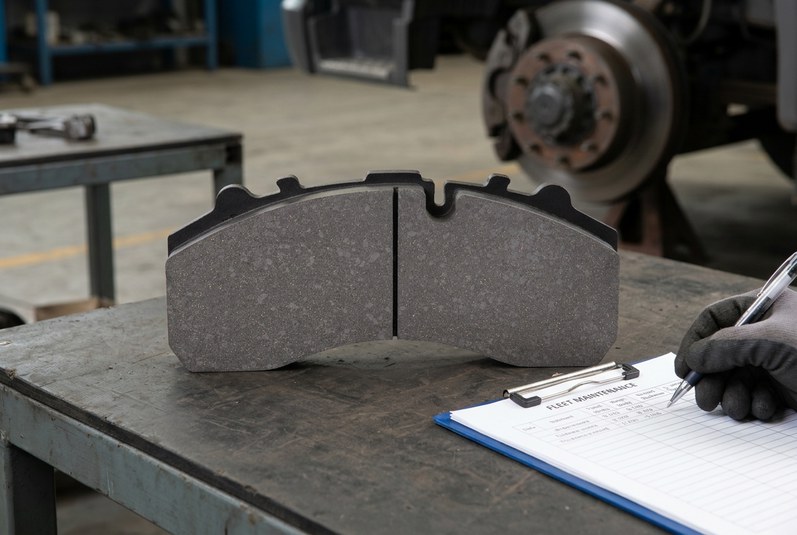
Once you have fleet data, build a side-by-side supplier comparison. A structured evaluation separates marketing claims from documented capability. Here's the verification checklist we recommend for quarry tipper brake pad sourcing.
- Approval scope: Ask for current ECE R90 approval documentation and check whether the approval covers the exact pad part number you'll import. Don't accept a blanket certificate alone.
- Manufacturing quality: Require IATF 16949 certification for the production site, not just a trading company. Visit or request photos from the IATF 16949 certified facility.
- Friction and thermal test data: Request reports aligned with SAE J2522, GB 5763-2018 or equivalent. Look for hot friction stability across repeated stops, not just a single coefficient of friction number.
- Wear resistance under abrasive conditions: Ask whether the supplier has tested pad life with high-dust or off-road duty cycles. Compare wear rate per 1,000 km under loaded conditions, but treat published numbers as indicative until fleet trials confirm them.
- Packaging and batch traceability: Check that each box carries batch codes, part numbers, and production dates. This matters when a field issue needs a root-cause investigation.
- Logistics and stock support: Confirm MOQ, lead time, and export packaging with the supplier's export team. Don't assume every supplier handles container consolidation and customs documents the same way.
Frankly, the price gap between certified and uncertified pads rarely justifies the warranty risk. A quarry fleet that loses brake performance on a downhill run can pay far more in downtime and liability than the savings from a cheap pad.
Technical Evaluation Table for Quarry Tipper Brake Pads
Use this table when comparing suppliers. Each factor connects a quarry field condition to a verifiable document or test output.
| Evaluation factor | Field condition to record | What to request from supplier | Why it matters |
|---|---|---|---|
| Dust tolerance | Rock dust type, wash frequency, pad face condition | High-abrasive compound test data; edge wear reports | Dust accelerates wear and caliper contamination |
| Load spectrum | Loaded vs empty ratio; typical GVW 40–70 t | Approved load range for pad application; fleet references | Overloaded braking raises fade risk |
| Route profile | Maximum grade, downhill length, stop frequency | Hot friction stability test results | Long grades keep discs hot and reduce brake torque |
| Maintenance interval | Pad thickness log, running clearance, caliper slide condition | Wear rate per 1,000 km from supplier tests | Sets realistic replacement budget and downtime planning |
| Moisture and washdown | Water exposure at wheel wash stations; mud ingress | Water recovery / wet braking test data | Wet brakes can lose bite on first stops |
| Approval and traceability | Pad part number, batch code, axle application | ECE R90 approval scope, IATF 16949 certificate, batch records | Protects against non-compliant replacement parts |
Bottom line: Every row should be backed by a document or a recorded field measurement, not a verbal claim. For fleets running drum brake axles, the same logic applies to commercial vehicle brake linings.
Replacement and Fitment Check for Fleet Procurement
Quarry tippers often run mixed brake systems across a fleet: air disc brakes on newer trucks and drum brakes on older units or trailers. A pad or lining that fits one axle won't necessarily fit another, even if it looks similar.
- Identify the axle and brake type first. Record whether the vehicle uses air disc, S-cam drum, or wedge drum brakes. Then match the pad or lining against the supplier catalogue.
- Verify dimensions and chamfers. Do not rely on visual matching. Ask for the dimensional drawing and compare pad length, width, thickness, and chamfer configuration. If the supplier catalogue does not show the exact match, write: Confirm with supplier catalogue.
- Check running clearance and bedding-in requirements. After installation, follow the brake lining installation guide for correct running clearance. Poor bedding-in can cause glazing and reduced early bite on loaded tippers.
- Run a controlled fleet trial. Put a limited number of trucks on the supplier's pads and collect the same dust, load, route, and maintenance data you gathered before purchase. Compare wear rate and fade behavior before rolling out to the full fleet.
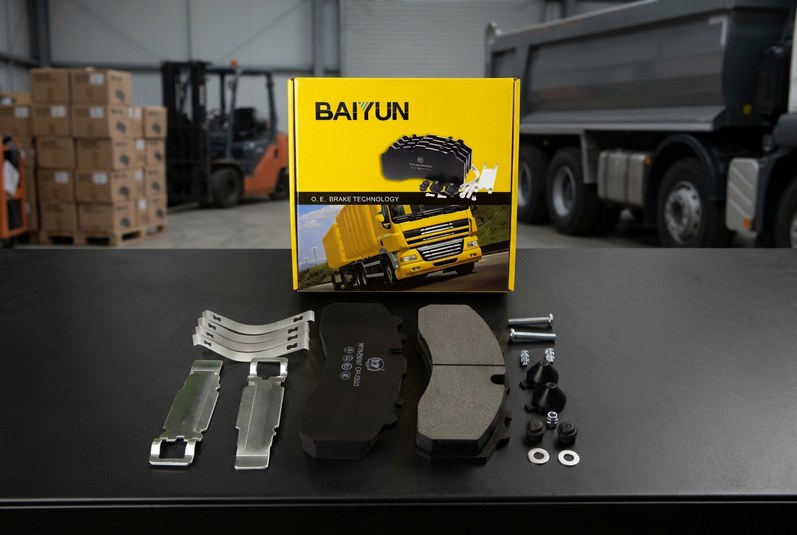
BAIYUN Brake product codes such as CP2218, CP2215 and CP2203 represent commercial vehicle pad references available for distributor evaluation. Always confirm the exact part number, dimensions, and approval scope with the supplier catalogue before ordering.
FAQ: Quarry Tipper Brake Pad Sourcing for Importers and Distributors
How do quarry tipper brake pads differ from standard truck pads?
Quarry tipper pads must handle higher thermal loads, abrasive dust, and frequent stop-start cycles. Standard truck pads may glaze or wear rapidly on unpaved haul roads. Look for compounds with documented hot friction stability and dust-wear resistance.
What documentation should a brake pad supplier provide for quarry duty?
Ask for ECE R90 approval scope, IATF 16949 site certification, friction test data, material safety sheets, and batch traceability records. Avoid suppliers that only provide a generic certificate without part-specific approval references.
How many field data points do we need before comparing suppliers?
Collect at least four types: dust and washdown logs, load and route profile, maintenance wear measurements, and operator feedback. Without these, you can't evaluate whether a supplier's pad life claims match your operation.
What is the biggest mistake fleet buyers make when sourcing quarry tipper pads?
Buying on price alone and ignoring route-specific maintenance data. Dusty unpaved roads can cut pad life by roughly 25–50% compared with paved highway operation—treat that as illustrative. A cheap pad that fails early creates more downtime than the margin saved.
Can importers request private label or custom packaging for quarry tipper brake pads?
Yes, many BAIYUN Brake distributors order OE/aftermarket packaging with their own brand. Confirm MOQ, lead time and export documentation with the export team before placing the first trial order.
Final Advice for Quarry Tipper Brake Sourcing
Quarry and tipper fleets don't forgive lazy brake selection. The right pad for a dusty, 60 t downhill route isn't the cheapest pad in the supplier's catalogue. It's the one with a documented ECE R90 approval, stable friction under heat, and wear logs that match your own maintenance records.
With our 49+ years of manufacturing experience, BAIYUN Brake builds commercial vehicle brake pads and CV brake lining range under IATF 16949 controls for heavy commercial applications. If you're an importer or distributor evaluating quarry tipper brake pad supply, request a wholesale quote and send us your fleet duty records. We'll help you match pad compounds to the dust, load, and route conditions that actually shorten pad life.
Was this article helpful?
Average Rating: 5/5 (64)