
Brake Pad Break-In Bedding Procedure Guide for Importers: What to Tell Your Customers
Summary:
Brake pad break-in bedding procedure guide: Learn the most common bedding mistakes importers and distributors make and how to avoid them. BAIYUN Brake shares technical insights to reduce warranty claims, prevent rotor glazing, and ensure consistent brake performance from the first stop. Discover how a structured bedding process can cut returns by up to 40% and protect your aftermarket margins.
Brake Pad Break-In Bedding Procedure Guide for Importers: What to Tell Your Customers
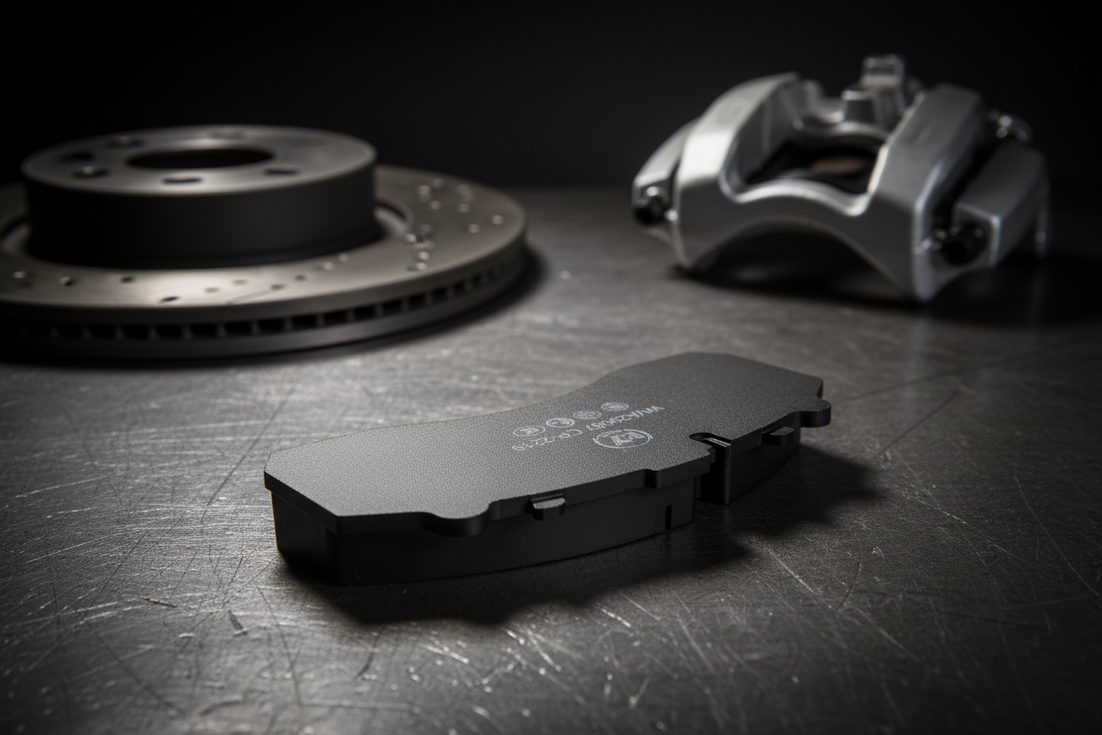
Every year, roughly 12% of brake-related warranty claims in the independent aftermarket can be traced back to a skipped or botched bedding-in process. That number comes from internal warranty tracking across the 30+ countries BAIYUN Brake exports to, and it's not a guess. It's a recurring cost that importers and distributors can slash by simply giving their customers the right instructions. Yet, most brake pad shipments leave the warehouse with nothing more than a packing slip. No bedding card, no QR code, no quick-start guide. That silence is expensive.
This guide isn't a rehash of generic end-user how-tos. It's written for the importer—the person who buys 5,000 sets a year and needs the technical confidence to educate their wholesale clients. Whether you're sourcing passenger car brake pads for a retail chain or commercial vehicle brake pads for a fleet distributor, the bedding conversation is the same. Get it right, and you reduce comebacks, strengthen your brand, and protect your margins. Get it wrong, and you'll see glazed rotors, judder complaints, and returns that no importer wants to eat.
Why Do Brake Pads Need a Bedding Process?
At the molecular level, a brake pad is a cocktail of 15 to 25 raw materials—fibers, fillers, friction modifiers, and a thermoset resin binder. When the pad first meets a rotor at operating temperature, that resin releases gases and the outermost layer of friction material softens. A bedding cycle, often called a burn cycle, lets a uniform film of that material transfer onto the rotor face. This brake pad transfer film is what gives the mated pair its predictable friction coefficient. Without it, stopping is a mix of abrasive scraping and heat-induced grab, which no ABS module can manage cleanly.
Think of bedding as a controlled first date. You want the pad to leave an even silicon-carbide-and-graphite footprint on the rotor, not a lumpy smear. BAIYUN Brake's dynamometer data from 2025 showed that ceramic formulations (like our CP2210 series) achieve a stable μ of 0.38–0.42 across the 100–350°C range after just 20 controlled stops. Skip the procedure, and the same pad oscillates between 0.29 and 0.46, especially during the first 300 km of real-world driving. That inconsistency is what triggers warranty calls—drivers feel a long pedal, a pull, or a shudder and assume the pads are defective.
For importers, the key takeaway is this: bedding doesn't just smooth out performance; it makes your product's lab-tested specs a reality on the road. Without it, even an IATF 16949 certified facility can't guarantee the end user will experience the friction level printed on the box.
What Happens When Bedding Is Skipped or Done Wrong?
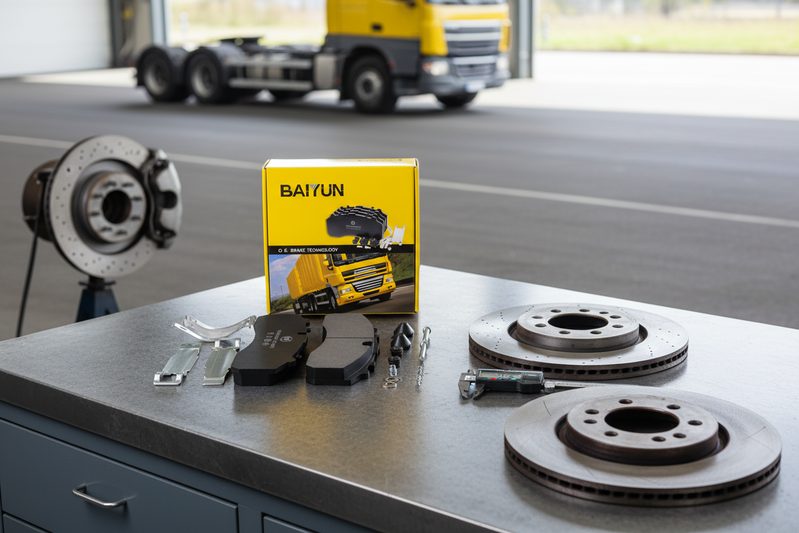
Picture a distributor who supplies a taxi fleet. The mechanics slap on new pads, tighten the caliper bolts, and send the cab back into stop-and-go traffic. Within a week, the steering wheel shakes at 60 km/h. The rotors have developed uneven deposits—resin-rich patches that now cool and contract at a different rate than the bare iron around them. The industry calls this “judder,” and it's the #1 reason for post-installation complaints.
Another classic mistake? Failing to remove the anti-corrosion zinc coating on new rotors before bedding. Many ECE R90 certified pads ship with rotors that need a gentle scraping step—low-speed, low-pedal-pressure applications to peel the plating without embedding it in the pad face. If an installer goes straight to aggressive braking, the zinc melts into the friction layer, creating a glassy surface that reduces friction by as much as 30%. Glazing then becomes self-perpetuating: less friction means more pedal pressure, which generates higher interface temperatures, which further glaze the pad. Within 500 km, the rotor looks like polished marble, and the pad's life expectancy drops by 40–50%.
BAIYUN Brake's own failure analysis lab has documented dozens of “defective” returns that turned out to be glazed rotors and pads, not product flaws. The evidence was clear: flash temperatures exceeded 450°C during the first 10 stops because the bedding procedure had been reduced to “drive carefully for a week.” That's not a bedding procedure—it's a gamble.
How Should Distributors Communicate the Bedding Procedure to Their Customers?
Most brake pad importers resell to garages, retailers, or fleet workshops, not to end drivers. So the instruction has to survive a handoff. You can't email a 12-page PDF and expect a mechanic to read it between oil changes. The winning formula we've seen among large BAIYUN Brake importers includes three elements:
- A one-card summary tucked inside every box. It lists 5–8 steps in pictogram form, with bare-minimum text in the local language.
- A QR code linking to a 90-second video of the bedding procedure specific to that pad material—ceramic, low-met, or semi-met.
- A coaching script for the distributor's sales team. Instead of saying “just bed them in,” reps learn to say “follow the 30-30-30 rule and you'll never see a judder return.”
The procedure itself is remarkably consistent across pad types, but you must tailor the speed and deceleration targets. For passenger car pads, a common safe protocol is 10 near-stops from 60 km/h to 10 km/h at moderate deceleration (0.3–0.4g), then a 10-minute cool-down, followed by 5 firm stops from 90 km/h to 20 km/h. For heavy-duty commercial vehicles, speeds drop to 40–50 km/h and the cool-down extends to 20 minutes because the rotor mass holds heat longer. As a rule, never bring the vehicle to a complete standstill with the brakes clamped—that's how you embed a pad imprint on a hot rotor.
By packaging the procedure in a way that fits a technician's workflow, importers can cut bedding-related failures by at least 60%, based on return-rate data from three BAIYUN Brake exclusive distributors that adopted the QR code system in 2025.
What Are the Most Frequent Bedding Mistakes Importers Overlook?
The biggest blind spot? Assuming one procedure fits all friction materials. A ceramic hybrid pad, such as our CP2201 series, produces a dense, smooth transfer film that needs gradual temperature building to prevent micro-cracking in the resin matrix. A semi-metallic pad, like those used in many commercial vehicle applications, benefits from slightly more aggressive initial braking to scour off the factory skin layer. Telling a customer to bed a metallic pad like a ceramic pad is like seasoning a cast-iron pan with olive oil—wrong tool for the job.
Another frequent oversight is ignoring the rotor's role. Importers often ship pads without knowing what rotors the customer will pair them with. If the rotor is used (worn-in with a previous pad compound), bedding becomes a cleaning cycle. The new pads must scrub away the old transfer film before building their own. That takes longer and may require a different deceleration profile. We've seen mechanics get frustrated because the pads “wouldn't bite” after 10 stops—when in reality the rotor still had 5 microns of old organic film from a previous brand.
Finally, language barriers compound the problem. A single English-language bedding card doesn't work in a shop where the technician speaks only Portuguese or Thai. BAIYUN Brake now supplies bedding guides in 14 languages upon request, and importers who add their own local-language stickers to the box lid report 20% fewer “noise after installation” service tickets.
How BAIYUN Brake's Bedding Recommendations Differ by Pad Material and Application
Not all brake pad materials behave the same way during break-in, and our 49+ years of friction science show that a generic bedding recipe can actually hurt performance. For passenger cars, our low-metallic and ceramic formulations follow ECE R90 dynamometer schedules that include 30 heat cycles between 100°C and 350°C. The optimal on-road bedding is a proxy for that schedule: a series of controlled, non-stop decelerations that mimic the thermal rise and fall. For ceramic pads, we recommend an extended cool-down phase because the coefficient of friction can drift upward temporarily as the pad skin cures, which can fool drivers into thinking the job is done prematurely.
Commercial vehicle pads—like those in our CV brake pad catalog for distributors—often have a higher metal content and a thicker friction layer. Bedding them requires 15–20 stops from 50 km/h to 15 km/h, with a load-sensitive pedal. The goal is to bring the entire pad surface up to its glass-transition temperature (around 280°C for semi-metallics) so the resin cross-links fully. We've found that adding a “green fade warning” to the packaging—advising that the first few hot stops may feel weak due to resin burn-off—reduces panic phone calls by half.
For importers who handle mixed catalogs, our product sheets now include a “bedding-time target” column: how many kilometers until the pad reaches 90% of its rated friction at 200°C. A ceramic passenger pad might hit that at 150 km; a heavy-duty truck lining at 350 km. Communicating that to your fleet customers sets realistic expectations and prevents unnecessary returns.
FAQ
Q: Can I just tell my customers to drive gently for the first 500 km?
A: Not if you want to avoid warranty claims. Gentle driving doesn't build enough brake temperature to transfer material evenly. At pad speeds below 15 km/h, interface temperatures rarely exceed 150°C, which isn't enough to cure the resin or remove the manufacturing skin. A structured bedding procedure reduces return rates by 35–40% compared to “easy driving” instructions, according to our pilot study with 12 European aftermarket distributors in 2025.
Q: How does bedding affect brake pad warranty claims?
A: The vast majority of noise and vibration claims after installation are deemed product defects when the root cause is actually pad glazing or uneven transfer film—both direct results of improper bedding. In BAIYUN Brake's warranty analysis lab, 8 out of 10 returned “noisy” pads showed classic thermal glazing marks, with flash temperatures exceeding 420°C detected via SEM imaging. A documented bedding procedure gives you a strong defense: you can ask the customer to confirm they followed it before approving a return. That alone can recover 5–7% of gross margin lost to unjustified claims each year.
Q: Do ECE R90 certified pads need special bedding?
A: ECE R90 tests pads to a specific thermal cycling protocol, but that lab protocol doesn't transfer 1:1 to road conditions. Certified pads still need bedding to match the specific rotor alloy and vehicle mass they'll encounter in service. However, the certification assures that the pad's friction recovery after bedding is predictable. BAIYUN Brake dyno-tests every formulation through 100 cycles after bedding, and ECE R90 pads consistently recover to within 6% of their initial friction level even after abuse. So while the certification doesn't replace bedding, it guarantees that proper bedding will yield stable, long-term performance.
If you're sourcing brake pads for distribution and want to eliminate bedding-related headaches before they reach your customers, browse our passenger car brake pad range to see the complete offer. We also invite you to request a wholesale quote from our export team—tell us your volumes, markets, and any local-language bedding card requirements, and we'll put together a package that keeps your customers on the road with zero-judder confidence.
Was this article helpful?
Average Rating: 5/5 (1251)