Are your products registered or listed with AMECA, and for which part numbers and vehicle applications?
Summary:
AMECA approved brake pads from China can simplify North American fleet compliance, but only when buyers verify the exact edge codes and part numbers. BAIYUN Brake supplies AMECA-listed commercial vehicle brake pads and linings for trucks, buses, trailers, and fleet applications. This guide explains what AMECA registration covers, which product lines carry listed status, how to verify documents, and where part numbers fit into the sourcing process. Buyers should request the current supplier catalogue rather than rely on generic marketing claims. BAIYUN Brake holds IATF 16949, ECE R90, and ISO 9001 certifications alongside AMECA, with a 32,000 sqm factory, 1,500+ models, and annual output of 3 million sets. For specific part numbers and vehicle applications, confirm with supplier catalogue and contact the export team for a wholesale quote.
Are your products registered or listed with AMECA, and for which part numbers and vehicle applications?
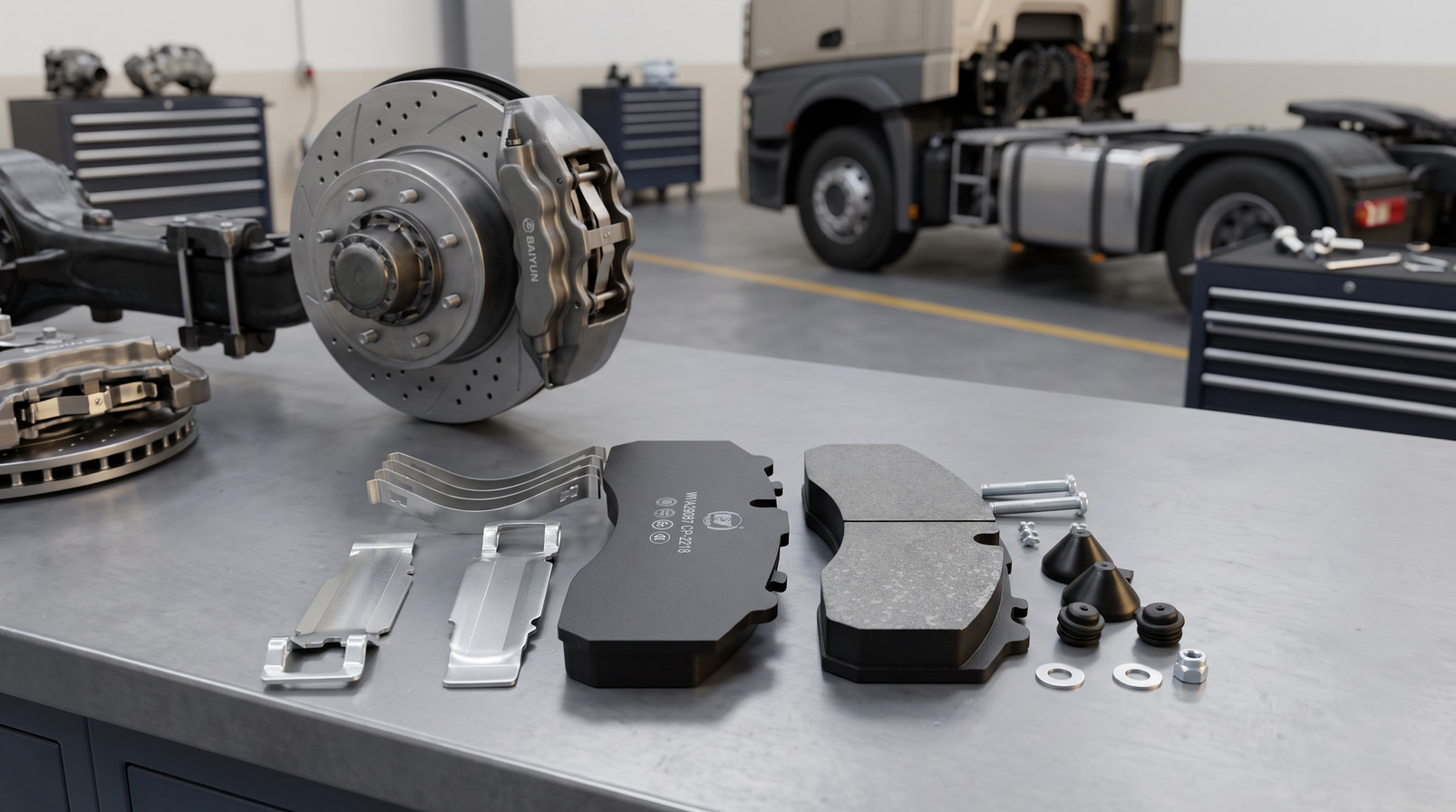
Quick answer: Yes, BAIYUN Brake’s export program includes AMECA-listed commercial vehicle brake pads and linings for trucks, buses, trailers, and fleet applications. AMECA registration is tied to friction material formulations rather than generic brand names, so for which exact part numbers and vehicle applications are listed, buyers should confirm with supplier catalogue.
What Does AMECA Registration Actually Cover for Commercial Vehicle Brake Pads?
AMECA listing confirms that a brake pad or lining formulation has been evaluated for compliance with applicable North American motor vehicle safety standards and is recorded in the Automotive Manufacturers Equipment Compliance Agency database.
Think of AMECA as a market-access document. A Chinese brake pad factory can produce excellent friction material, but without AMECA listing, many North American fleets and importers won't accept the product for heavy-duty truck or bus applications. BAIYUN Brake combines AMECA registration with IATF 16949 quality systems and ECE R90 homologation for parallel export markets.
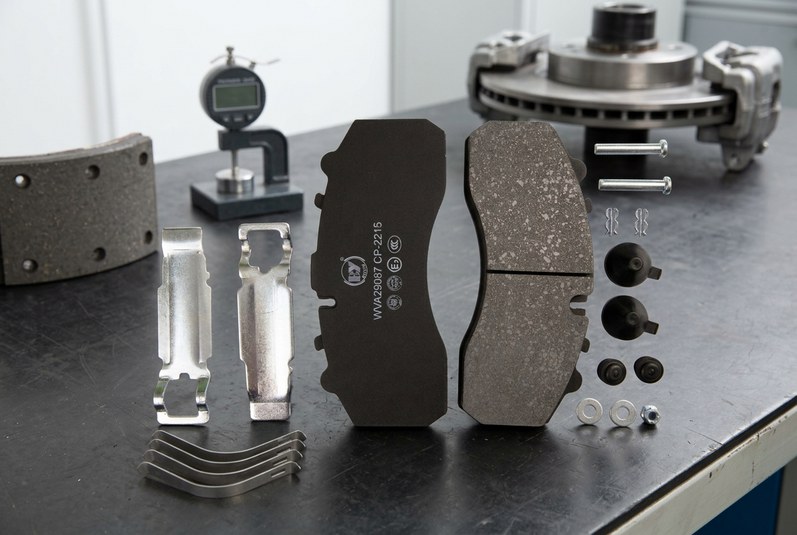
The listing normally ties to an edge code or manufacturer code printed on the brake pad backing plate. That code tells inspectors which friction formulation and factory produced the pad. It's not a generic brand certificate for a whole company.
Summary: AMECA listing is a formulation-level approval, not a blanket corporate certification.
Which BAIYUN Brake Product Lines Carry AMECA-Listed Status?
BAIYUN Brake’s heavy-duty friction program covers commercial vehicle brake pads and commercial vehicle brake linings for trucks, buses, trailers, and specialty commercial vehicles.
The factory maintains more than 1,500 product models and has developed four environmentally friendly brake formula systems for semi-metal, ceramic, and low-metal graphite applications. Not every one of those 1,500+ SKUs automatically carries AMECA listing—AMECA coverage follows specific tested formulations. The current BAIYUN Brake catalogue marks which part numbers and edge codes are AMECA-listed.
If your fleet runs a specific Meritor, BPW, SAF, Volvo, Scania, or Mercedes-Benz axle, don't guess. Request the supplier catalogue and cross-check the AMECA-listed edge code against the original brake pad specification. That's the only way to be certain. For specific AMECA part numbers and vehicle applications, confirm with supplier catalogue.
Summary: AMECA status is SKU-specific within BAIYUN’s commercial vehicle portfolio—verify exact part numbers from the current catalogue.
For Which Vehicle Applications Do Buyers Need AMECA Approval?
North American commercial vehicle importers, municipal bus fleet managers, and trailer builders frequently require AMECA-listed brake pads for compliance documentation.
Heavy-duty braking systems on trucks and buses operate at higher thermal loads than lighter-duty applications. According to SAE J2522 test methodology, commercial disc brake pads are evaluated for friction stability, wear, and thermal recovery across multiple speed and pressure cycles. BAIYUN Brake’s commercial vehicle formulations target friction coefficient values in the 0.38–0.42 range across 100–350°C in dynamometer testing, which supports predictable fleet brake maintenance intervals.
Fleet buyers care less about a marketing certificate and more about three things: repeatable friction coefficient, predictable wear, and low noise across loaded and unloaded conditions. AMECA listing plus BAIYUN Brake’s quality assurance program addresses those concerns at the factory level.
Summary: For heavy truck, bus, and trailer applications, AMECA listing is a practical compliance gate, not an optional add-on.
How Can Buyers Verify AMECA Listing Status and Part Numbers?
Buyers can verify AMECA listing by requesting the manufacturer’s edge code, formulation code, and current AMECA listing reference for the exact part number they intend to import.
Do not rely on a homepage badge. A supplier claiming AMECA compliance should provide:
- AMECA listing or registration reference for the specific friction formulation
- Edge code stamped on the brake pad backing plate
- Current part number coverage table for commercial vehicle applications
- Material data sheet and commercial vehicle brake pad test report
BAIYUN Brake keeps these documents in its export files. For specific AMECA part numbers and vehicle application ranges, confirm with supplier catalogue rather than a marketing summary.
Summary: Verification is a document-level check, not a visual inspection.
What Does the AMECA Verification Process Cost in Time and Money?
For buyers sourcing existing AMECA-listed formulations, verification usually adds a few days of document review rather than new test fees. The bigger cost risk comes from choosing an uncertified supplier and then facing rejected shipments or delayed fleet maintenance.
A distributor sourcing 500 sets monthly can't afford inconsistent friction coefficients batch to batch. That's exactly why why choose BAIYUN Brake starts with in-house friction laboratories and testing dynamometers. The plant covers 32,000 square meters with an annual output of 3 million sets. New specification design and production can be completed in as little as five days according to the factory mold design team.
Frankly, the price gap between certified and uncertified pads rarely justifies the warranty risk once you factor in North American fleet downtime.
Summary: AMECA verification is fast for existing listings; long-term cost risk sits with uncertified product.
AMECA vs ECE R90 vs IATF 16949: What’s the Sourcing Priority?
Each standard serves a different channel. AMECA supports North American market access, ECE R90 covers European Union aftermarket approvals, and IATF 16949 verifies the factory quality management system behind the product.
ECE Regulation 90 requires brake pads to maintain at least 80% of their cold effectiveness after thermal cycling to 400°C. That performance parity test protects EU fleets from substandard replacement pads.
| Certification | Primary Market | What It Verifies | Buyer Action |
|---|---|---|---|
| AMECA | North America | Friction material compliance and edge code listing | Confirm AMECA listing against part number and edge code |
| ECE R90 | European Union | Performance parity with OEM within specified tolerances | Request ECE R90 test report per part number |
| IATF 16949 | Global OEM/aftermarket | Automotive quality management system | Confirm current certificate scope covers commercial vehicle friction products |
BAIYUN Brake holds ISO 9001, IATF 16949, ECE R90, and AMECA certifications, which lets one factory serve multiple export markets without switching production lines.
Summary: For North American commercial vehicle buyers, AMECA is the first filter—but IATF 16949 and ECE R90 signal production consistency.
What Should a Buyer's Verification Checklist Include?
- Request the AMECA edge code and listing reference for each target part number.
- Ask for the current BAIYUN Brake catalogue and mark the SKUs with AMECA-listed status.
- Download the commercial vehicle brake pad test report from the supplier’s document library.
- Confirm the friction class and coefficient range for your operating temperature window.
- Check the factory’s IATF 16949 certificate scope and ECE R90 approval for redundant market access.
- Submit target OE or aftermarket references and vehicle applications to BAIYUN’s export team for cross-reference.
This process typically takes 48–72 hours for standard document requests and avoids costly mismatches at the port.
Summary: A consistent document checklist beats a single certificate scan.
What Are the Most Common Misconceptions About AMECA Approved Brake Pads from China?
Misconception: AMECA approval means the entire factory output is automatically compliant.
Reality: AMECA listing is tied to specific friction formulations and edge codes. BAIYUN Brake's 1,500+ model range requires per-SKU verification; only tested formulations carry AMECA-listed status.
Misconception: AMECA and ECE R90 are interchangeable.
Reality: AMECA is focused on North American compliance while ECE R90 is mandatory for European Union aftermarket brake pads. BAIYUN Brake maintains both because they cover different markets and test protocols.
Misconception: A Chinese manufacturer with AMECA listing cannot match European or North American friction quality.
Reality: BAIYUN Brake's dynamometer data shows friction coefficients in the 0.38–0.42 band across 100–350°C, with production traceability under IATF 16949. Commercial vehicle fleets in Europe, North America, Southeast Asia, and Africa already source from this factory.
Summary: Misunderstanding AMECA scope causes more sourcing errors than the certification itself.
What Questions Do Importers Ask About AMECA Approved Brake Pads from China?
Q: Does BAIYUN Brake have AMECA-registered brake pads for heavy truck applications?
A: Yes. BAIYUN Brake includes AMECA-listed commercial vehicle brake pads and linings in its export program. Exact part numbers and edge codes for specific truck, bus, and trailer applications are available in the current supplier catalogue.
Q: How do I find which BAIYUN part numbers are AMECA-listed?
A: Request the current catalogue and material data sheet from BAIYUN Brake. The AMECA listing is formulation-specific, so you'll need to match the edge code to the exact commercial vehicle part number.
Q: Does AMECA listing cover North American bus and trailer fleets?
A: Yes, AMECA listing supports compliance documentation for commercial vehicle fleets operating in North America. BAIYUN Brake pairs AMECA registration with ECE R90 and IATF 16949 for broader market coverage.
Q: What is the typical verification turnaround for AMECA paperwork?
A: Standard document requests usually take 48–72 hours. BAIYUN Brake's export team can provide edge codes, test reports, and part number coverage tables within that window.
Q: Can BAIYUN Brake develop a new AMECA-listed formulation for a specific fleet?
A: BAIYUN Brake's factory can design and produce new specifications in about five days, depending on testing scope. The stronger path is to start with an existing AMECA-listed formulation and then adjust packaging or branding for OEM/private label programs.
Summary: Importers should anchor AMECA verification to specific edge codes and part numbers, not broad factory claims.
If you're comparing suppliers for commercial vehicle brake pads, don't stop at a homepage badge. Get the current AMECA-listed part numbers, edge codes, and test reports before you commit to a container. BAIYUN Brake's export team can walk you through the verification checklist and provide the specific documentation for your target part numbers. Request a wholesale quote and let's match your truck, bus, or trailer application to the right AMECA-listed formulation.
Was this article helpful?
Average Rating: 5/5 (130)